7 Church Giving Trends Every Pastor Should Know in 2026
The landscape of church generosity is shifting faster than most leaders realize. Here’s what the data says about where church giving is headed, and what it means for your ministry this year.
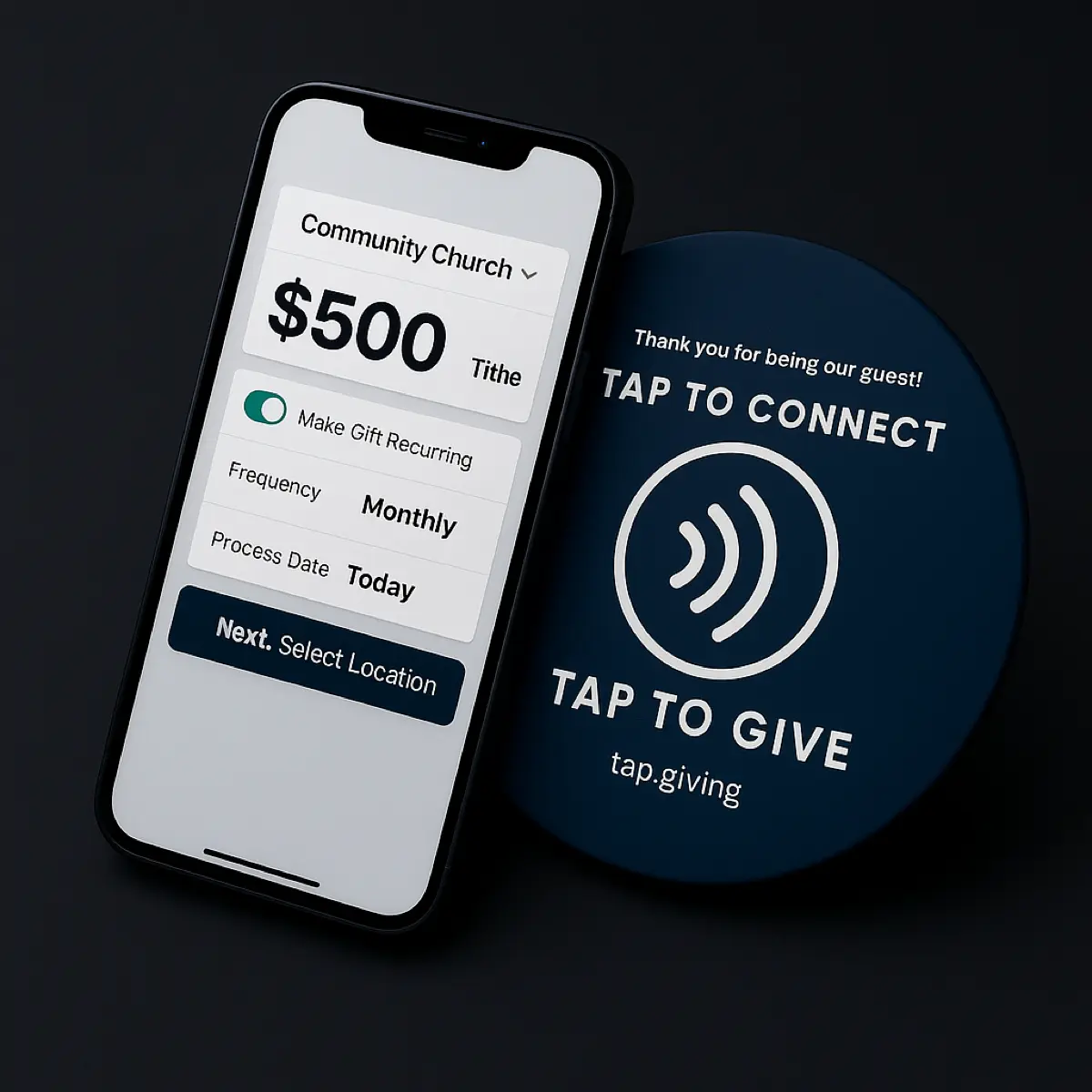
See your church's plate and price in 30 seconds
Design it yourself on the next page. From $3.50 per plate, free shipping, no monthly fees.
Church giving is changing, not someday, but right now. The church giving tech market is projected to reach $500M to $1.5B by 2033, growing at 12% annually. That growth reflects a fundamental shift in how congregations approach generosity: from analog to digital, from complicated to simple, from subscription-heavy to cost-conscious.
As a pastor myself, I know the challenge. You want to make giving easy for your people without turning the offering moment into a tech demo. You want to steward the church’s budget wisely without falling behind on tools that actually help people give. And you want data you can trust, not sales pitches from vendors.
That’s what this article is: a briefing on the seven church giving trends that matter most in 2026, backed by the numbers. Whether you’re leading a church of 80 or 8,000, these trends will shape your giving strategy this year.
1. Digital Giving Now Exceeds Cash at Churches That Offer It
This is no longer a prediction, it’s the reality. Digital giving accounts for 41% of total church donations where digital options are available, and that share is growing 15-20% year over year. At churches that have invested meaningfully in digital infrastructure, digital giving has already surpassed cash and checks combined. Fifty-seven percent of Protestant churches now report year-over-year increases in digital donation volume.
The gap between churches with digital giving and those without is becoming a chasm. Churches that added digital options within the last two years report an average overall donation increase of 32%. The reason is straightforward: when you give people a way to give that matches how they already pay for everything else in their lives, they give more often and in larger amounts. Digital gifts average 3x higher than cash gifts in most church settings.
The churches still relying exclusively on the offering plate and an occasional check in the mail are watching their giving decline, not because people are less generous, but because fewer people carry the tools those methods require. Cash usage has fallen 42% since 2019, and check writing has declined even faster. Meanwhile, 60% of churchgoers say they are willing to give digitally if the option is available. The demand is there. The question is whether your church has built the supply.
The Digital Giving Gap
What This Means for Your Church
If you don’t offer at least one digital giving method, you are leaving money on the table, not because your people don’t want to give, but because they literally cannot in the moment. The question is no longer “should we go digital?” but “how many digital channels do we need?” Start with whatever your congregation can adopt this month, even if it’s just a link on your website. Then layer in tools that work during the service, because that’s where the most impulsive and emotional giving happens.
2. Tap-to-Give Is Replacing Text-to-Give as the Preferred In-Pew Method
Text-to-give had its moment. It peaked around 2020 when churches scrambled for contactless alternatives during the pandemic. But the reality is that text-to-give has significant friction: you need to remember a phone number, type a keyword, navigate a link, and enter payment information, all during a worship service. Adoption rates for text-to-give have been declining since 2021, and most churches report single-digit usage percentages.
NFC tap-to-give is emerging as the clear successor. The data is compelling: NFC generates fewer steps than a QR code in head-to-head studies, and it outperforms text-to-give on every friction metric. A tap takes 2-3 seconds. No phone number to remember. No app to download. No keyword to type. The phone just… opens a giving page. It’s the same gesture people use to pay at the grocery store, the coffee shop, or the gas station. Every iPhone since the iPhone 7 (2016) and nearly every Android phone since 2015 has NFC built in, that’s over 95% of smartphones in use today.
Churches using NFC tap-to-give plates report higher in-service participation among congregants who interact with the plates, and visitors can give with no app, people who never used the church app or text-to-give but will tap a plate without thinking twice. That’s the conversion metric that matters most.
Text-to-Give (Declining)
- • Requires memorizing a phone number
- • 10-20 seconds to complete
- • Often requires app or account setup
- • $50 to $200/month subscription
- • Adoption peaked in 2020
NFC Tap-to-Give (Growing)
- • One tap, no setup required
- • 2-3 seconds to complete
- • Works on 95%+ of smartphones
- • One-time hardware cost
- • fewer steps than a QR code
What This Means for Your Church
If you’re still paying monthly fees for a text-to-give service with declining usage, it’s time to evaluate the ROI. NFC tap-to-give plates like Tap.Giving cost $3.50 to $5.00 per plate as a one-time purchase, no monthly fees. For a 200-seat church, that’s $800 once vs. $600 to $2,400 per year for text-to-give. The math is not subtle.
3. Younger Generations Expect Contactless Giving
Here’s a number every church leader needs to internalize: 73% of Americans under 40 rarely carry cash. For Millennials and Gen Z, tapping a phone is not a novelty, it’s how they pay for everything. Coffee. Parking. Transit. Groceries. When an offering plate passes and the only option is cash or check, they don’t think “I’ll give later.” They think “I can’t give now.” And later almost never comes.
The generational divide in giving behavior is widening. Barna Group research shows that 73% of practicing Christian Millennials gave to a church in the past year, but the method matters enormously. When digital giving is available, younger donors give at comparable or higher rates than older donors. When it’s not, participation drops off a cliff. Gen Z gives at lower total dollar amounts but at surprisingly strong participation rates, when the giving mechanism matches their habits.
This isn’t about chasing trends. It’s about meeting the next generation of your church where they already are. The church that makes giving feel as natural as tapping at Starbucks is the church that will cultivate lifelong generosity in its younger members. And the stakes are real: Millennials and Gen Z are entering their peak earning years. They’ll be the financial backbone of your church within the next decade. The habits you help them form now will determine your church’s financial health for a generation.
What This Means for Your Church
Don’t make younger members adapt to your giving system. Adapt your giving system to them. NFC tap-to-give plates on pew backs or chairs give every person in the room, including first-time visitors, a way to give in the same gesture they use 20 times a week outside of church. No app. No account. No learning curve. Read our full guide on reaching Millennials and Gen Z through giving.
4. Churches Are Rejecting Monthly SaaS Fees for Giving
Subscription fatigue has hit the church world hard. After years of stacking SaaS tools, one for streaming, one for communication, one for giving, one for church management, one for volunteer scheduling, many church leaders are doing the math and not liking what they see. A typical mid-size church in 2026 can easily spend $500 to $2,000 per month on software subscriptions alone. That’s $6,000 to $24,000 per year before a single dollar goes to ministry, missions, or staffing.
Giving platforms are a particularly painful line item because the cost is so visible against the value. Pushpay runs approximately $1,475 per month. Tithely’s full suite is $119 per month. Overflow charges $208 to $833 per month. And on top of the subscription, most platforms also charge transaction fees of 2.9% + $0.30 per gift. For a church processing $20,000 per month in digital giving, that’s an additional $610 per month in transaction fees alone.
The pushback is leading churches toward a new model: own the hardware, choose your software. Platform-agnostic solutions, tools that work with whatever giving platform the church already uses, are gaining ground because they eliminate lock-in and reduce ongoing costs. A church can buy NFC tap-to-give plates once, pair them with a free-tier giving platform like Tithely or Donorbox, and have a complete in-service giving solution for a fraction of what a premium subscription costs.
This matters especially for smaller churches. A church of 150 people doesn’t need, and can’t afford, a $1,475/month giving platform. But they absolutely need a way for people to give during worship. The one-time hardware model levels the playing field. A 100-seat church pays the same $500 once as a megachurch pays per 100 plates. No volume penalties, no pricing tiers based on features you’ll never use.
Annual Cost Comparison: Giving Technology
What This Means for Your Church
Audit your giving technology spend. Add up every monthly fee and every per-transaction cost. Then ask: could we achieve the same result with a one-time hardware purchase and a free or lower-cost platform? For many churches the answer is yes. Tap.Giving plates work with whatever giving platform you already use, Tithely, Pushpay, Givelify, Donorbox, Planning Center, or anything with a web-based giving page. No monthly fees from us. Ever.
5. Recurring Giving Is the New Baseline, Not the Goal
For years, “set up recurring giving” was the holy grail of church generosity strategy. And recurring giving is still critically important, it provides predictable revenue that lets churches budget with confidence. But the smartest churches in 2026 have realized something: recurring giving is the outcome, not the starting point. The real lever is the first gift.
A first gift is what turns a visitor into a repeat giver, and tapping removes every step in the way of it. That means more than half of every new giver you acquire through a digital channel will come back. And a meaningful percentage of those repeat givers will eventually set up a recurring gift on their own. The implication is enormous: every time you reduce friction on the first gift, you are building your recurring giving base automatically.
This reframes the entire giving conversation. Instead of asking “how do we get more people to set up recurring giving?” the better question is “how do we make the first gift as easy as possible?” A visitor who taps their phone on an NFC plate during their first visit, gives $25, and leaves feeling good about it is worth more to your church long-term than a member who thinks about setting up recurring giving every Sunday but never gets around to it.
Think about it from the giver’s perspective. Someone visits your church for the first time. They’re moved by the message. They want to respond with generosity. If they can tap their phone and give in three seconds, they do. If they have to download an app, create an account, verify their email, and enter their bank details, they don’t. That moment of generosity has a short half-life. The churches that capture it in the moment are building a pipeline that feeds recurring giving for years.
What This Means for Your Church
Stop obsessing over recurring giving signups and start optimizing the first-gift experience. How fast can a first-time visitor go from “I want to give” to “I gave”? If the answer involves downloading an app, creating an account, or filling out a multi-field form, you are losing more than half your potential new givers before they finish. Make the first gift feel effortless and the recurring gifts will follow.
6. Multi-Channel Giving Is Standard, Not Optional
The average growing church in 2026 offers 3-4 giving methods: an online giving page for remote and recurring gifts, NFC tap-to-give or QR codes for in-service giving, text-to-give as a backup channel, and a physical offering for cash and checks. The days of offering one method and hoping it fits everyone are over.
The data backs this up decisively. Single-channel churches see 30-40% lower giving participation than multi-channel churches of comparable size. The reason is simple: different people prefer different methods. Your 65-year-old deacon writes a check. Your 30-year-old worship leader taps their phone. Your college student gives through the app on their way home. Your first-time visitor needs the lowest-friction option available. If any of those people encounter a method that doesn’t match their habit, the gift doesn’t happen.
Multi-channel doesn’t mean complicated. The best strategies layer simple tools: a giving page (which you probably already have), NFC plates on the pews (one-time purchase), and a QR code on the bulletin or screen as a fallback. You don’t need five different vendors. You need two or three channels that all point to the same giving page.
The key insight is convergence, not complexity. All your giving channels should point to the same destination, your giving page. Whether someone taps a plate, scans a QR code, clicks a link in the app, or types in the URL from the screen, they all land in the same place. This simplifies your operations while maximizing the surface area for generosity. It also means you can change your giving platform anytime without replacing your hardware.
What This Means for Your Church
Count your current giving channels. If the answer is one or two, you have a clear opportunity. Adding NFC tap-to-give plates is the fastest way to add a high-converting in-service channel without ongoing costs. Pair them with your existing online giving page and a QR code on your screen, and you’re covering every generation in the room. The goal is not to have the most channels, it’s to have no dead zones where a willing giver can’t give.
7. Data Privacy and Simplicity Are Winning Over Feature Bloat
There’s a counterintuitive trend emerging in church technology: simpler tools are outperforming complex ones. Giving platforms loaded with dashboards, analytics, donor profiles, automated campaigns, and 47 configuration options are seeing lower completion rates than clean, simple giving pages. The data is stark: simple giving pages outperform feature-heavy platforms by 2-3x in completion rates.
Part of this is a usability problem. More features mean more cognitive load for the giver, more screens to navigate, and more chances for someone to abandon the process. But there’s a deeper trend at work: people are increasingly wary of platforms that collect extensive personal data. In a world of data breaches and targeted advertising, churchgoers, especially younger ones, are more likely to complete a gift on a page that asks for payment information and nothing else.
Churches are responding by choosing platforms and tools that prioritize the giver’s experience over the admin’s dashboard. This doesn’t mean analytics don’t matter. It means that the data collection happens behind the scenes through the payment processor, not through a front-end form that makes the giver feel surveilled. The best giving experiences in 2026 feel like tapping at a coffee shop: fast, private, done.
There’s a theological dimension to this as well. Generosity should feel like worship, not like filling out a mortgage application. When a giving experience is fast and private, it preserves the spiritual moment. The giver stays present in the service instead of being pulled into a five-screen checkout flow. The churches that understand this aren’t just getting better technology, they’re creating better worship experiences.
Feature Bloat Friction
- • Account creation required
- • Multiple form fields
- • Email, phone, address collection
- • App download prompts
- • 30-60% abandonment rate
Simple Giving Experience
- • No account needed
- • Minimal fields (amount + payment)
- • No data harvesting
- • Works in browser, no app
- • 2-3x higher completion rates
What This Means for Your Church
Test your own giving flow. Pull out your phone, pretend you’re a first-time visitor, and try to give. How many taps does it take? How many fields do you fill out? How much personal data are you asked for before you can complete a gift? If the answer is more than amount and payment method, you’re losing people. The trend is toward less, not more, and the churches that embrace simplicity are seeing real results.
What Smart Churches Are Doing Right Now
These seven trends point in the same direction: simpler, cheaper, more accessible giving experiences win. The churches seeing the strongest generosity growth in 2026 aren’t buying the most expensive tools. They’re buying the right tools, and combining them thoughtfully.
Here’s the playbook that forward-thinking church leaders are following right now:
Audit your giving channels
List every way someone can give at your church right now. If there are fewer than three, you have a gap. If none of them work during the service without an app, you have a bigger gap.
Add NFC tap-to-give for in-service giving
Mount plates on pew backs or chairs. One-time cost. No monthly fees. Works with your existing giving platform. This is the highest-impact, lowest-cost upgrade most churches can make.
Simplify your giving page
Strip it down to the essentials: amount, fund (if needed), and payment. Remove mandatory account creation. Remove unnecessary data fields. Every field you remove increases completion rates.
Optimize for first-time givers, not recurring signups
Make the first gift effortless. Stop requiring account creation before someone can give for the first time.
Cut the SaaS you don’t need
Review every subscription. If a free tier or a one-time purchase can accomplish the same thing, make the switch. Redirect those savings into ministry.
Test the visitor experience every quarter
Walk into your own church as if you’ve never been there. Try to give. Time it. If it takes more than 30 seconds, iterate. Your visitors won’t tell you it was too hard, they’ll just leave without giving.
Track what matters
Focus on three metrics: number of unique givers (not just total dollars), first-time giver rate, and giving participation as a percentage of attendance. These tell you more about the health of your generosity culture than total revenue ever will.
These seven trends share a common thread: the churches that are growing their generosity in 2026 are the ones making it easier to give, not harder. They’re spending less on technology and getting more from it. They’re meeting every generation where they are. And they’re treating the first gift as the most important moment in a giver’s journey, because it is.
You don’t need to address all seven trends at once. Pick the one or two that represent the biggest gap in your current strategy and start there. For most churches, that means adding an in-service digital giving option (like NFC tap-to-give) and simplifying the giving page. Those two changes alone can meaningfully increase participation and average gift size within weeks, not months.
The church giving landscape will keep evolving. But the direction is clear: simpler, more accessible, more affordable, and more respectful of the giver’s time and privacy. The churches that align with these trends aren’t just raising more money, they’re building a culture of generosity that will sustain their mission for decades to come.
Ready to future-proof your church’s giving?
100 plates. $500. Free shipping. No monthly fees. Works with your existing platform.
Start a quote to get 10% off for 7 days
Related Articles
Church Giving for Millennials and Gen Z
Young adults want to give, they just won’t carry cash or download a niche app. How to reach the next generation.
GuideBest Church Donation Technology in 2026
Compare 6 types of church donation technology: NFC, online platforms, text-to-give, QR codes, kiosks, and ChMS.
ComparisonQR Codes vs. NFC for Church Giving
Head-to-head comparison of QR codes and NFC tap-to-give for churches. Which is better for worship settings?