QR Codes vs. NFC Tap-to-Give for Church Giving
Both get a phone from someone’s hand to your giving page. Neither is wrong. QR codes cost almost nothing to try and work with any phone camera; NFC tap plates cost more up front and trade the scan-and-aim step for a single tap. Here’s an honest look at where each one actually fits, so you can pick the right one for your own church rather than assume one has replaced the other.
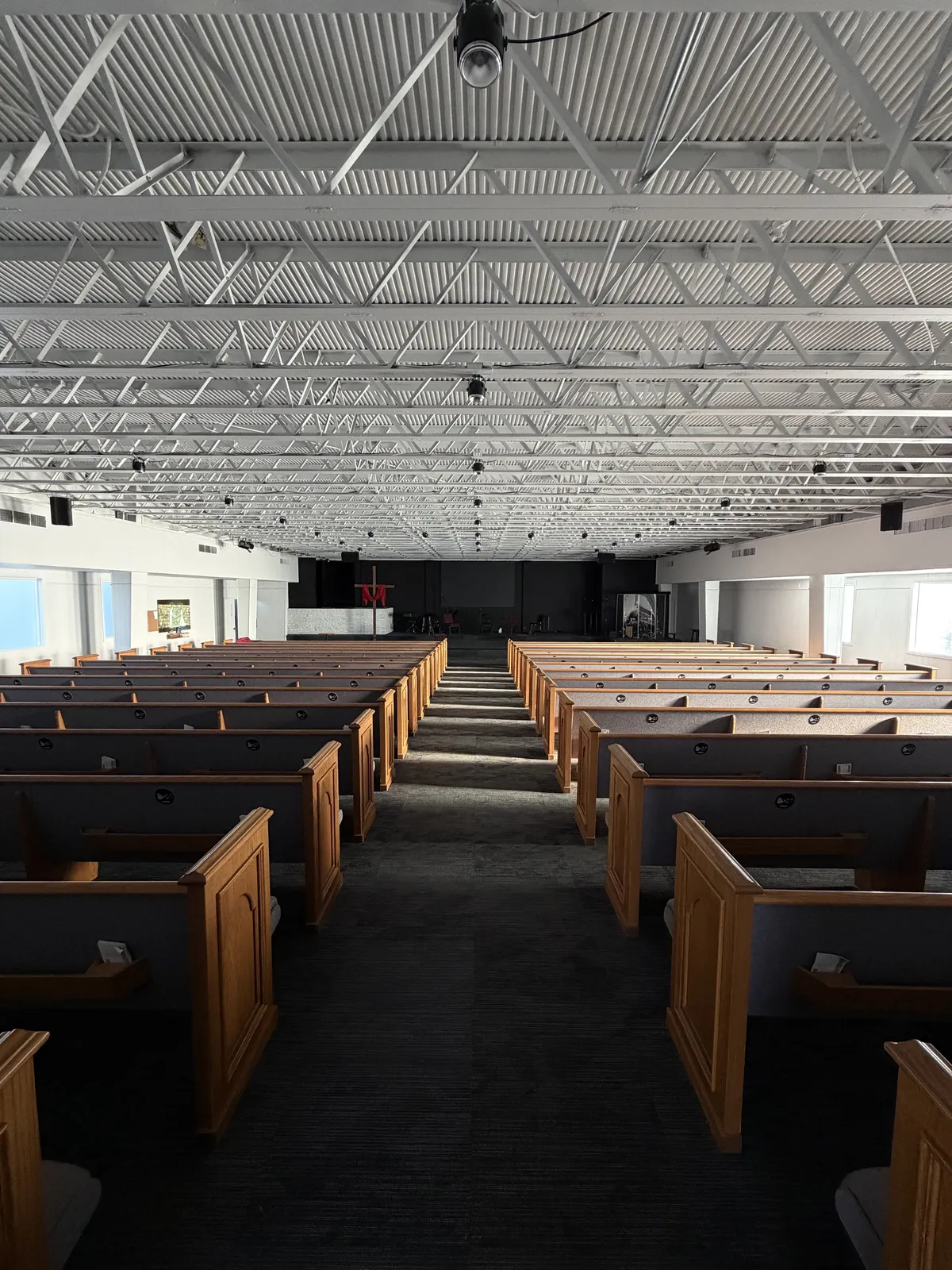
See your church's plate and price in 30 seconds
Design it yourself on the next page. From $3.50 per plate, free shipping, no monthly fees.
1. QR Codes vs NFC for Church Giving: The Friction Gap
Here’s the thing about QR codes: they feel simple, but they’re not. Watch someone in your congregation try to scan one during the offering. They pull out their phone. They open the camera app. They hold it steady, trying to get the right angle. They wait for the link to appear. They tap the link. Then they wait for the page to load. That’s four to five distinct steps, all happening during a worship service while the pastor is transitioning to the next segment.
NFC tap-to-give eliminates all of that. A congregant holds their phone near the plate. Their giving page opens instantly. That’s it. One motion, one second, done. It’s the same gesture they use to pay for coffee at Starbucks or tap into the subway, no learning curve required.
QR Code Flow
- 1 Pull out phone and unlock it
- 2 Open camera app and aim at QR code
- 3 Hold steady, wait for recognition
- 4 Tap the banner link that appears
- 5 Wait for giving page to load
NFC Tap Flow
- 1 Hold phone near the plate
No camera. No aiming. No waiting. The giving page opens automatically, even on a locked screen for most modern phones. Ready to try it? Follow our step-by-step launch guide to get started in minutes.
Why Every Step Matters
The general pattern in checkout and signup flows is well established: each extra step between someone's intent and the action costs you some share of people who would have followed through. A QR code's four or five steps (unlock, open camera, aim, wait, tap the link) carries more of that drop-off risk than a one-motion tap. That said, a QR code that's already working fine for your congregation isn't worth replacing just for the sake of fewer steps — the gap matters most when your current method is visibly struggling.
2. Accessibility: Reaching Every Generation
Ask anyone under 30 to scan a QR code and they’ll do it without thinking. Now ask your 65-year-old deacon. Or the 78-year-old widow who’s been tithing faithfully for four decades. For many older congregants, QR codes are genuinely confusing. “Which app do I open?” “Where’s my camera?” “It’s not scanning, is my phone too old?”
NFC tapping is different. It’s the same motion people use with Apple Pay and Google Pay at the grocery store, a gesture that’s become second nature for millions, including older adults who use contactless cards every day. There’s no app to find, no code to aim at, no multi-step process to remember. You hold your phone near the plate. A notification appears. You tap it. Done.
Intuitive for Older Adults
NFC mimics the contactless payment gesture most seniors already use at stores and pharmacies. No new skill required, just proximity.
No Visual Dependency
QR codes require good eyesight to aim a camera. NFC works by touch alone, making it accessible for congregants with vision challenges.
Kids Get It Instantly
Children watching parents tap their phones learn the gesture immediately. It normalizes generosity from a young age in a way that scanning codes never will.
No App Required
Neither NFC nor QR codes require a separate app. But NFC has fewer steps and doesn’t require navigating a camera interface, a real barrier for many. See why app-free giving matters for churches.
3. Aesthetics: Tech That Looks Like Church
Walk into a beautifully designed sanctuary, stained glass, warm wood, thoughtful lighting, and then look at the laminated QR code taped to the back of the pew. It looks like a takeout menu at a fast-casual restaurant. That black-and-white pixelated square screams “tech” in a space that’s meant to feel sacred.
NFC tap plates look like what they are: offering plates. The NFC chip is embedded invisibly inside a physical plate that gets passed from hand to hand, just like your congregation has done for generations. There’s no screen, no code, no sticker. The technology is completely hidden inside a familiar, dignified object.
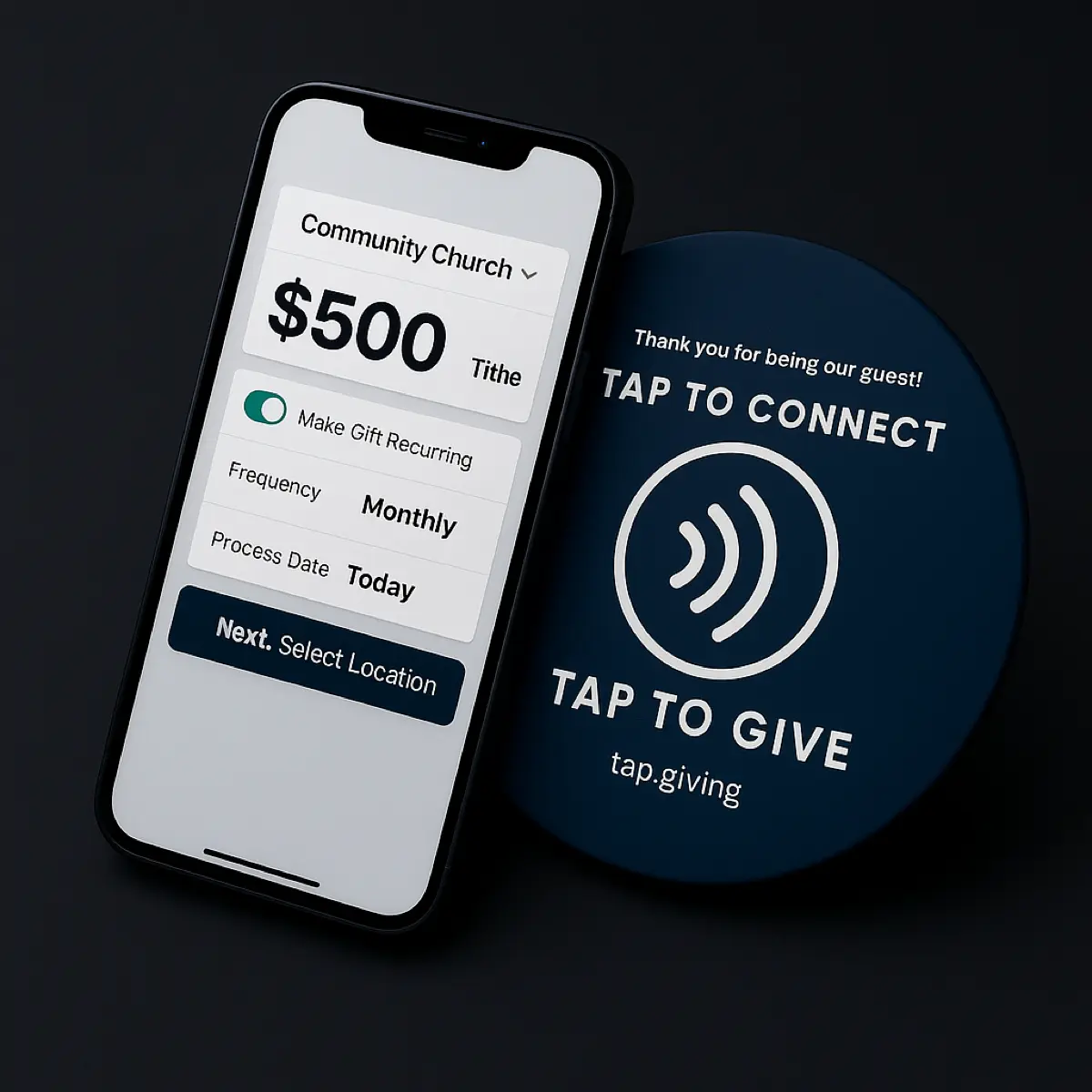
QR Codes Look Like…
- Laminated cards taped to pews
- Projection slides competing for screen time
- Printed flyers that get crumpled and lost
- A tech startup, not a house of worship
NFC Plates Look Like…
- A real offering plate your church is proud of
- Custom-branded with your church’s identity
- A natural extension of your worship service
- Invisible technology inside a familiar form
The design matters more than you think. The offering moment is an act of worship, not a transaction. When the mechanism for giving looks and feels like part of the service, people engage with it differently. They participate rather than observe. That shift from “scanning a code” to “tapping a plate” is subtle but transformative.
4. Reliability: What Can Go Wrong With Each
QR codes have a dirty secret: they fail all the time. Not dramatically, they just quietly don’t work in exactly the conditions churches create every Sunday. Dimmed lights during worship? The camera can’t read the code. Projecting the QR code on a screen? Glare and moiré patterns make it unscannable from most seats. Printed on a bulletin insert? Half the congregation folded it and the code is creased.
NFC sidesteps all of that, since it works by radio proximity rather than a camera reading a pattern: dim lights, distance from a screen, and a creased printout stop mattering. It has its own real limits, though. Some older Android phones ship with NFC turned off until someone enables it, and a metal phone case or a metal mounting surface can block the signal entirely — which is why churches mounting plates on metal pews typically add a thin non-metal backing. It is not a technology with zero failure modes, just different ones than a camera has.
Low Light
Harder for QR. Cameras need light to read codes. Most worship environments are intentionally dim. NFC is unaffected — it isn’t reading anything visually.
Screen Glare
Harder for QR. Projector screens and glossy printouts create glare that cameras can’t resolve. NFC is unaffected.
Distance
Harder for QR. Scanning from a pew 30 feet from the screen takes real aim. NFC only works within inches, by design — the phone has to physically reach the plate.
Neither failure mode is fatal on its own — plenty of churches run QR giving successfully by keeping the code well-lit, close, and printed matte. The honest summary: QR reliability depends on conditions a church controls (lighting, print quality, screen placement); NFC reliability depends on conditions a church usually doesn’t need to think about, in exchange for the phone needing to get within a few inches of the plate.
6. Setup, Maintenance & Durability
Let’s talk about what happens after you decide to use either solution. Because the Sunday-morning experience is only part of the story, someone on your team has to set it up, maintain it, and deal with it when things go wrong.
QR Code Maintenance
- Need to design and print new signage every time your giving URL changes
- Paper/laminated codes get damaged, faded, or lost weekly
- Screen-projected codes require AV team coordination every service
- Must update every printed code if you switch giving platforms
- Volunteers need to ensure codes are visible and well-lit
NFC Plate Maintenance
- Plates arrive pre-programmed, unbox and use
- No batteries, no charging, no Wi-Fi needed
- NFC chips last indefinitely, they don’t wear out
- Switch platforms? Update the link remotely, same plates
- Ushers pass them exactly like traditional plates
Here’s the thing about durability: QR codes are printed media. They fade in sunlight, get water-damaged, tear, and need replacing regularly. NFC chips are solid-state electronics sealed inside a plate. They have no moving parts, no ink to fade, and no surface that degrades. A Tap.Giving plate you buy today will work exactly the same way in ten years. View pricing to see why it costs less than a year of reprinting QR codes.
Setup Comparison
7. The Real Cost: QR Codes vs NFC Church Giving
“But QR codes are free!” This is the most common pushback, and it sounds logical on the surface. Generating a QR code costs nothing. But the total cost of using QR codes in a church is far from zero.
You need to print them. Laminate them. Replace them when they get damaged (which happens constantly). Redesign them when your giving URL changes. Coordinate with your AV team to display them on screen. And every time you reprint, there’s someone’s time involved, time that could be spent on ministry.
5-Year Cost: QR Codes vs. NFC Plates (10-plate church)
| Expense | QR Codes | NFC Plates |
|---|---|---|
| Initial hardware/signage | $15 to $30 (printing/laminating) | $35 to $45 |
| Reprinting (quarterly replacements) | $60 to $120/year | $0 |
| Staff/volunteer time (design + print) | 2-4 hrs/year | 0 hrs |
| Platform change reprints | $15 to $30 each time | $0 (update link remotely) |
| Monthly subscription fees | $0 | $0 |
| 5-Year Total | $315 to $660+ | $35 to $45 (one time) |
And that table doesn’t account for the biggest cost of all: lost donations. If NFC plates achieve higher in-service participation versus QR codes’ 2-5%, the difference in actual giving revenue dwarfs any hardware cost. At $3.50 to $5.00 per plate with no monthly fees, NFC plates typically pay for themselves in a single Sunday, see our pricing for exact per-plate costs at every quantity tier. For a deeper dive into the math, see the full ROI breakdown every pastor should know.
The ROI in Perspective
8. Full Side-by-Side Comparison
Here’s the complete picture. Every factor that matters for in-service giving, laid out side by side.
| Factor | QR Codes | NFC Tap Plates |
|---|---|---|
| Steps to donate | 4-5 (camera → aim → wait → tap link → load) | 1 (hold phone near plate) |
| Time to giving page | 15-30 seconds | 2-3 seconds |
| Works in low light | No | Yes |
| Works with screen glare | No | Yes |
| Requires camera app | Yes | No |
| Separate app required | No | No |
| Older adult friendly | Confusing for many | Intuitive (like Apple Pay) |
| Participation rate | ~2-5% | In the seat |
| Visual aesthetic | Printouts, stickers, slides | Elegant physical plate |
| Social proof / communal feel | Individual, invisible | Shared, visible |
| Setup time | 30-60 minutes | 2 minutes |
| Ongoing maintenance | Reprint & replace regularly | None |
| Durability | Weeks to months | Years (no wear) |
| Works with any giving platform | Yes | Yes |
| 5-year cost (10 units) | $315 to $660+ | $35 to $45 (one time) |
QR codes solved a real problem when churches needed a contactless option fast, and for many congregations they still do the job. Whether the gap above is worth closing depends on your own numbers and budget, not a universal rule.
When a QR Code Is Still the Right Call
A fair comparison has to say where QR codes actually win, because for some churches they do.
Cost today is the constraint
A QR code you generate and print costs essentially nothing beyond a sheet of paper. NFC plates are inexpensive per unit, but they're still a hardware purchase — a real consideration for a new church plant or a congregation stretching every dollar.
Nothing new to unbox
A QR code works the moment it's printed. There's no shipping wait, no physical object to distribute to ushers, no plates to store between services — a real advantage for a pop-up service, a temporary venue, or a church plant meeting somewhere different each week.
Works with any phone camera
QR scanning only needs a camera app, which every smartphone has had for years. NFC giving needs a phone with NFC turned on and a plate that supports it — rarely a real barrier today, but not literally zero setup on the giver's side either.
Your congregation already uses it comfortably
If your church adopted QR giving during or after the pandemic and people already tap it without hesitation, the friction this article describes may not match your actual experience. Don't fix a method that's genuinely working for your own congregation.
None of that changes the mechanics described above — low light, screen glare, and the extra steps are real, measurable friction points for QR in a worship setting. It just means the right answer depends on your church's budget, setting, and how QR is actually performing for you today, not a blanket rule that one technology always wins.
Choosing Between QR and NFC for Your Church
For most churches doing the offering during a live service, NFC removes real friction that QR codes add — the camera, the aiming, the low light, the wait. That's the case for switching. It's not a case against QR codes existing at all: a QR code on a giving-page link in an email, on a website, or on a poster in the lobby still works fine, because none of those situations have the low-light, in-the-moment constraints of a worship service.
QR codes had their moment, and for some churches they're still doing exactly what's needed: a low-cost, no-hardware way to collect digital gifts. If cost or a temporary setup is the deciding factor for your church right now, that's a legitimate reason to stick with QR for the offering itself.
If the friction described above — visitors who can't get the camera to focus, older members who give up after one failed scan, ushers troubleshooting instead of passing the plate — sounds like your Sunday, NFC tap-to-give plates are built for exactly that moment. With Tap.Giving, plates start at $3.50 each, one-time, with no monthly fees, no setup fees, and free shipping.
Either way, the giving method should match your church, not the other way around. See what plates would look like for your church if you want to compare the real thing against what you're using now.
Ready to Replace Your QR Codes?
NFC tap plates starting at $3.50 each. No monthly fees. No setup costs. Free shipping. Works with your existing giving platform.
Related Articles
Why Churches Love Tap.Giving
From zero monthly fees to instant setup, discover why churches are choosing Tap.Giving NFC plates to modernize their offering moment.
InsightsHow Tap Plates Are Driving Church Growth
The complete guide to NFC giving: why it works, use cases, and real results from churches seeing less friction.
Guide2026 Tap-to-Give Platform Comparison
Compare costs and features across Subsplash, Tithely, Tap Tag, and Tap.Giving.
5. The Social Proof Factor
Here’s something that doesn’t show up in a feature comparison chart: what does giving look like to the person sitting next to you?
With QR codes, giving looks like someone staring at their phone during the service. They could be texting, checking Instagram, or reading the news. There’s no visible connection between the person and the act of giving. No one around them knows they’re participating in the offering.
With an NFC tap plate, giving looks like giving. The plate comes down the row. Someone taps their phone on it. The person next to them sees it and does the same. There’s a visible, communal rhythm to it, the same rhythm churches have relied on with physical offering plates for centuries.
The Power of Visible Participation
Behavioral research consistently shows that people are more likely to take an action when they see others doing it first. In a church setting, this “social proof” effect is powerful. When a first-time visitor watches the people around them tap a plate, the gesture feels normal, expected, and easy to replicate. Learn more about how NFC converts first-time visitors into givers.
With QR codes projected on a screen, there’s no visible cue that anyone else is participating. Each person is alone with their phone. The communal moment disappears.
Communal Experience
The plate physically moves through the congregation. Everyone participates in the same moment, together. That shared experience is the essence of the offering.
Natural Prompting
When a plate arrives in front of you, it’s a gentle, physical prompt to participate. A QR code on a screen is easy to ignore. A plate in your hands isn’t.