The ROI of NFC Giving: Real Numbers Every Pastor Needs to See
Your finance committee doesn’t want to hear about “innovation.” They want to see the math. Here’s a complete cost justification for NFC tap-to-give plates, with real numbers you can take straight to your next budget meeting.
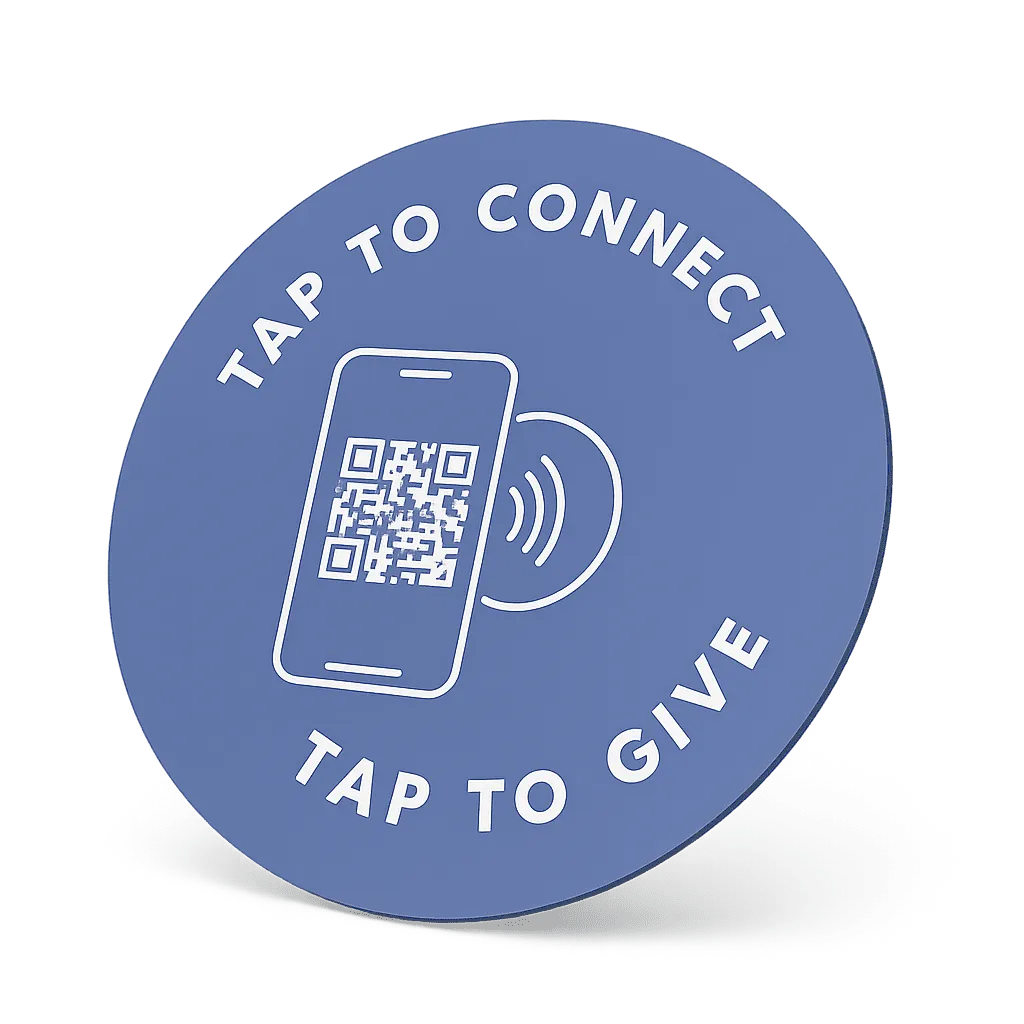
See your church's plate and price in 30 seconds
Design it yourself on the next page. From $3.50 per plate, free shipping, no monthly fees.
1. The Real Cost: NFC Giving ROI Starts with Lower Upfront Spend
NFC tap-to-give plates cost $3.50 to $5.00 per plate as a one-time purchase with no monthly fees, compared to $1,200 to $2,400/year for giving apps or $2,000 to $5,000+ per giving kiosk. Over five years, 100 NFC plates cost $500 total while alternatives cost $3,000 to $12,000, making NFC the lowest-cost giving technology available.
Before we get into ROI, let’s talk about what churches are actually spending on giving technology right now. If you’ve ever priced out a giving kiosk (see our kiosk vs NFC comparison), a text-to-give service, or even a dedicated giving app, you know the numbers add up fast.
Here’s what the landscape looks like in 2026:
Giving Kiosks
Per unit, upfront. Plus maintenance, software updates, and the volunteer who has to reboot it every other Sunday. Most churches need 1-2 kiosks minimum.
Dedicated Giving Apps
That’s $1,200 to $2,400 per year, every year, forever. And you still need people to download and learn the app before they can give.
Text-to-Give Services
$600 to $1,800 per year. Requires setup, configuration, and ongoing shortcode management. First-time givers still need instructions.
Tap.Giving NFC Plates
Per plate, one time. No monthly fees. No setup fees. Free shipping. Works with whatever giving platform you already use. That’s it.
The 5-Year Cost Comparison
Let’s say a mid-size church orders 100 NFC plates at $5.00 each (the minimum order). Total investment: $500. Here’s what that looks like next to the alternatives over five years:
Read that last column again. $500, one time, forever. No annual renewal. No “your plan is increasing by 15% this year” email. The plates work until you physically break them, and NFC chips don’t have batteries, moving parts, or software that becomes obsolete. See our full pricing breakdown for every quantity tier. If you’re a smaller congregation, the math is even more compelling, see how small churches get big results on a tight budget.
2. Break-Even Analysis: How Fast NFC Giving Pays for Itself
NFC plates break even after just nine gifts of $50, which most churches achieve within the first month.
The ROI of NFC giving is exceptionally high because the upfront cost is so low. Because there are no monthly fees, the plates continue producing returns every Sunday with zero additional cost.
Here’s the math that makes finance committees lean forward in their chairs. Your entire investment in NFC plates is so small that it takes almost nothing to pay for itself.
The Break-Even Scenario
If nine people each give one gift of $50 because the NFC plates made giving easy, your plates have already paid for themselves. If just one of those people gives $50 once a month? You’re looking at $600/year from a $500 investment, a 133% ROI in year one alone. And with 100 plates covering every pew, lobby, and event, you’ll hit that number fast.
Compare that to a giving kiosk. At $3,000 per unit, you need 60 people to give an extra $50 just to break even on the hardware. With a $150/month text-to-give platform, you need three extra $50 gifts every single month just to cover the subscription, before you see any net return.
NFC plates have the lowest break-even threshold of any giving technology available. That’s not marketing, it’s arithmetic. Ready to put the math to work? Order your plates and start seeing returns on your very first Sunday.
3. The Sunday Morning Math
In a typical 200-person Sunday service with 15 visitors, NFC plates can capture 5 new gifts averaging $25 each, that is $125 per Sunday and $6,500 per year in giving that would not happen otherwise. This conservative estimate uses a 33% visitor conversion rate, well below the higher in-service participation NFC plates can achieve.
Let’s walk through a typical Sunday service and see what NFC plates actually do to the numbers. This is the scenario we hear most often from churches running 150-250 in attendance.
A Typical Sunday: 200 People in the Room
200 attendees, of whom roughly 15 are first-time visitors (7.5%, a standard benchmark).
Without tap plates, most of those visitors give nothing. They don’t have cash. They don’t have the app. They don’t know the text number.
With NFC plates, 5 of those 15 visitors tap and give an average of $25 each. (That’s a 33% conversion rate, conservative given the higher in-service participation NFC plates can achieve.)
Result: $125 in new giving that Sunday that would not have happened otherwise.
Now Multiply That Across a Year
Here’s the Headline Number
$6,500 in new annual giving from a one-time $500 investment. That’s a 1,344% return on investment. And we haven’t even counted the existing members who switch from skipping the plate to tapping it, or the visitors who come back and become regular givers.
This isn’t theoretical. Research shows that churches with online giving options report $2,052 to $2,428 in per capita giving compared to $1,809 without digital options. NFC plates make digital giving accessible to everyone in the room, including the people who would never download an app. That’s the power of church giving without an app.
4. The Compounding Effect: Visitors Become Recurring Givers
If 20% of visitors who give via NFC return and half become recurring givers, that adds 26 new recurring donors per year contributing $15,600 annually, from a $500 plate investment. By year three, the compounding effect could mean 78 new recurring givers contributing $46,800 per year, all traced back to a single purchase.
The Sunday morning math only captures first-time gifts. But here’s where the ROI truly compounds: a percentage of those first-time visitors come back. And because they already gave once through your giving platform (via the NFC plate), the friction for their second gift is nearly zero, their payment info is saved, the URL is in their browser history, and giving feels natural.
Lifetime Value of a Converted Visitor
Let’s be conservative. Say 20% of visitors who give via NFC plates return and become regular attendees. Of those, half become recurring givers. Here’s what that looks like:
That’s $15,600 in new recurring annual giving from visitors who first gave because an NFC plate made it easy. (For a closer look at why visitors give when the plate arrives, read about turning first-time visitors into lifelong givers.) And those 26 new recurring givers? They don’t reset to zero next year. They keep giving. By year three, you could be looking at 78 new recurring givers contributing $46,800 per year, all traced back to a $500 investment in NFC plates.
This is the compounding effect that subscription-based giving tools can’t match. Their costs keep growing. Your plates keep working. The gap widens every year.
6. 5-Year NFC Giving ROI: The Long Game
Here’s where the NFC plate advantage becomes impossible to ignore. Subscription-based giving tools charge you the same amount (or more) every year. NFC plates cost you once. As the years pass, the gap between cumulative cost and cumulative return widens dramatically.
Cumulative Cost: NFC Plates vs. Subscription Alternatives
Year 1
Year 2 (cumulative)
Year 5 (cumulative)
The Key Insight
Subscription costs grow linearly. NFC plate costs stay flat at $500. By year 5, a church using a $150/month giving app has spent $8,550 more than a church using Tap.Giving, for technology that does essentially the same thing: get people to your giving page. The difference is that one method keeps billing you and the other doesn’t.
And remember: NFC plates aren’t replacing your giving platform. They’re the on-ramp to your existing platform. You keep Tithely, Subsplash, Planning Center, Pushpay, or whatever you’re already using. The plates just make it effortless for people to get there during the offering moment.
7. Cash Handling Costs That Disappear
This is the line item nobody thinks about until you add it up. Cash doesn’t just arrive in your church’s bank account. It has to be counted, recorded, secured, transported, and deposited. Each of those steps costs something.
Volunteer Time
2-3 people, 30-60 minutes every Sunday, counting and recording cash.
Security & Transport
Safe storage, secure bags, two-person deposit policy, potential armored transport for larger churches.
Bank Fees
Cash deposit fees, coin counting charges, and additional account maintenance for cash-heavy deposits.
Add It Up
A typical mid-size church spends $2,550 to $3,750 per year on cash handling when you factor in volunteer time, security, and bank fees. Every dollar that moves from cash to digital giving through NFC plates reduces those costs.
You won’t eliminate cash overnight. But as more people tap instead of dropping bills, your counting sessions get shorter, your deposit runs get smaller, and your volunteers get their Sunday afternoons back. That’s not just a financial win, it’s a people win.
8. Take This to Your Finance Committee
We built this article to be a document you can share. Here’s a summary you can copy into an email, print out for a board meeting, or read aloud in 90 seconds.
Finance Committee One-Pager
What It Is
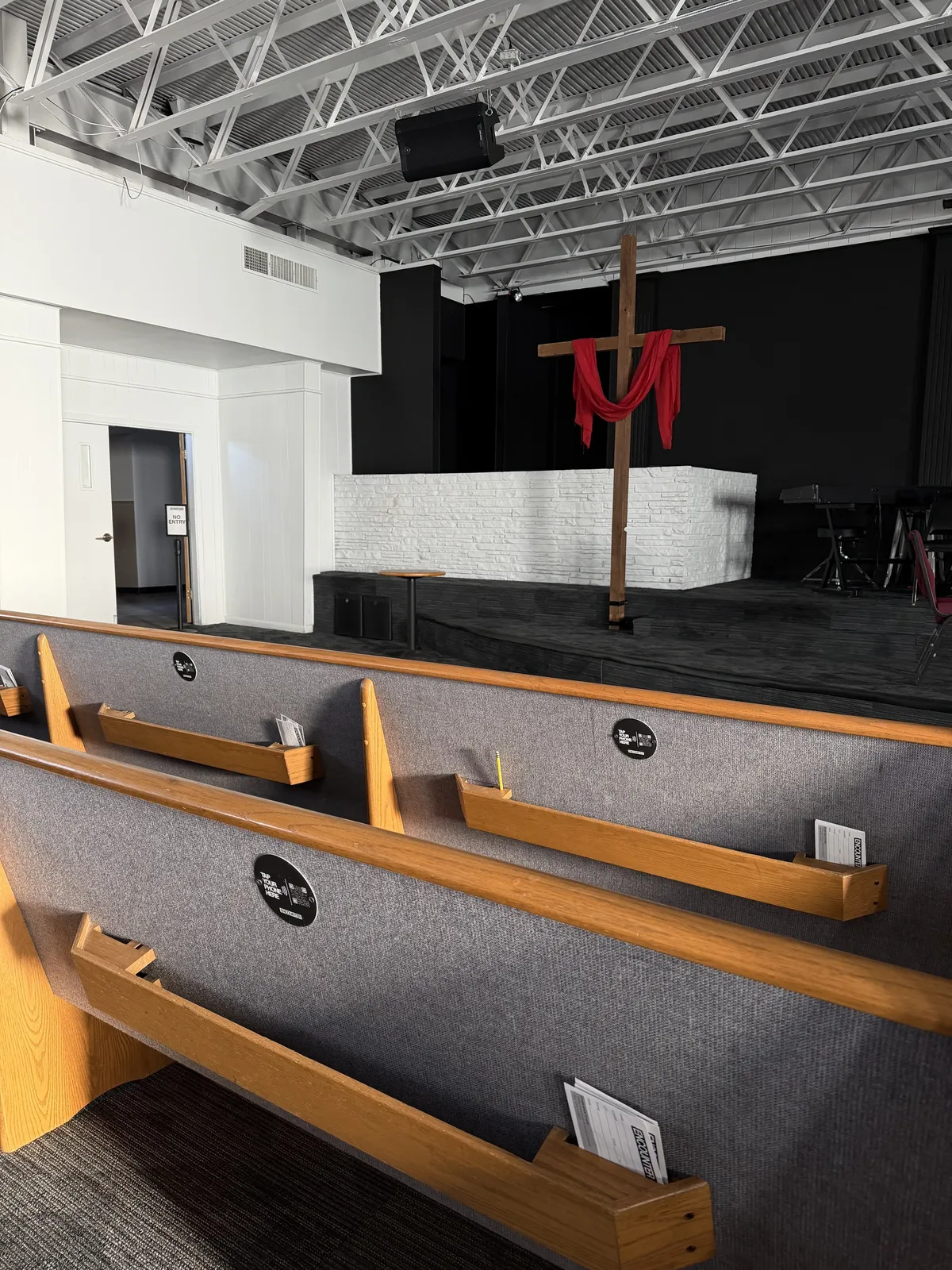
NFC tap-to-give plates that look and pass like traditional offering plates. When someone taps their phone, it opens our existing giving page. No app download. No new platform. Works with our current system.
Total Cost
$500 for 100 plates ($5.00 each). One-time purchase. No monthly fees. No setup fees. Free shipping. Volume discounts available for larger orders (as low as $3.50/plate at 400+). View pricing details.
Projected Return
Break-Even Point
Nine visitors giving a single gift of $50 each. At $125 in new visitor giving per Sunday, you break even in under a month, and every Sunday after that is pure return.
Risk
Extremely low. At $500 total, this is less than a single month of most giving app subscriptions. There’s no contract, no commitment, and no ongoing cost. You get 100 plates, enough for every pew, your lobby, and events, and they work forever.
Comparison to Alternatives
Giving kiosks: $2,000 to $5,000+. Text-to-give: $600 to $1,800/year. Giving apps: $1,200 to $2,400/year. NFC plates: $500 for 100 plates, once, forever.
The Question to Ask
“Can we justify spending $500 on something that could generate $6,500+ in new giving this year, reduce our cash handling costs, and make it easier for every visitor to give on their first Sunday?”
The answer writes itself. And when they say yes, hand them the complete launch guide so you can be up and running by next Sunday.
The Bottom Line
NFC tap-to-give plates aren’t just cheaper than the alternatives, they’re in a different category entirely. A one-time $500 investment that generates thousands in new giving, reduces operational costs, and works with your existing platform. No other giving technology comes close on ROI. For a broader look at how NFC plates stack up against kiosks, apps, and text-to-give, read our complete guide to church giving technology.
The math is simple. The risk is nearly zero. And every Sunday you wait is another Sunday of missed visitor donations, unnecessary cash handling, and an offering moment that could be doing more. Print this article. Share it with your finance team. The numbers speak for themselves.
Ready to See the ROI for Yourself?
Order NFC tap plates for your church. $3.50/plate. No monthly fees. Free shipping. The math starts working for you on day one.
Related Articles
Why Churches Love Tap.Giving
From zero monthly fees to instant setup, discover why churches are choosing Tap.Giving NFC plates.
InsightsQR Codes vs NFC: Why Churches Are Making the Switch
Compare QR code giving and NFC tap-to-give to see which technology wins for church offerings.
Guide2026 Tap-to-Give Platform Comparison
Compare costs and features across Subsplash, Tithely, Tap Tag, and Tap.Giving.