Beat the Summer Giving Slump: How to Keep Church Donations Steady When Attendance Drops
Church giving typically drops 15-25% every summer as attendance falls about 20% and gifts follow it. The fix is not a better sermon on generosity, it is more ways to give when people are not in the pew: recurring giving set up before summer, and physical NFC tap-to-give touchpoints at VBS, camps, and outdoor services. Here are seven strategies that keep donations steady from June through August.
See your church's plate and price in 30 seconds
Design it yourself on the next page. From $3.50 per plate, free shipping, no monthly fees.
1. The Summer Church Giving Slump Is Real, Here’s How Bad It Gets
Every pastor knows the feeling. Memorial Day hits, and the offering numbers start sliding. By mid-July, you’re watching the budget spreadsheet with that familiar knot in your stomach. The summer church giving slump isn’t a myth, it’s one of the most predictable financial patterns in church life.
Here’s what the data shows: most churches see attendance drop 20-30% between Memorial Day and Labor Day. A Church Answers pastor survey puts the typical decline at about 20 percent, and churches in vacation-heavy and college towns routinely report steeper drops. Giving follows almost exactly, declining 15-25% during those same months. For a church that collects $15,000 per week during the school year, that means losing $2,250 to $3,750 per week, or $27,000 to $45,000 over 12 summer weeks.
Meanwhile, your expenses don’t take a vacation. Staff salaries, utilities, mortgage payments, mission commitments, they all stay the same. The summer slump doesn’t just dent your budget. It can force hard decisions about ministries, staffing, and outreach at the exact time many churches are running VBS and community programs that cost more, not less.
Typical Church Giving Pattern by Month
Based on aggregate church giving data. April peaks due to Easter. December peaks due to year-end giving.
2. Why Church Giving Drops in Summer (It’s Not What You Think)
The easy explanation is “people go on vacation.” And that’s partly true. But the real reason giving drops is more specific: most churches only provide a way to give when someone is physically sitting in a pew on Sunday morning.
Think about it. Your congregation doesn’t stop wanting to give in July. They stop being in the room during the moment you ask. They’re at the lake, visiting family, sleeping in after a late Saturday, or attending a different church while traveling. The desire is there. The opportunity isn’t.
The “Out of Sight, Out of Mind” Effect
Widely cited church-giving research finds that about 60% of churchgoers say they’re willing to give digitally (Nonprofit Source). But willingness and action are two different things, and the gap between them is the whole game. When someone misses Sunday service, they lose the visual prompt, the offering moment, the plate being passed, the screen with the giving URL. Without that trigger, even generous people forget.
The summer church giving slump isn’t a generosity problem. It’s a touchpoint problem. And the churches that solve it are the ones that create giving opportunities beyond the Sunday morning pew.
This is good news, because touchpoints are something you can fix. You can’t control when families take vacation. But you can control how many opportunities people have to give, even when they aren’t sitting in your sanctuary on Sunday. The strategies below do exactly that.
3. Strategy 1: Push Recurring Giving Before Summer Starts
Recurring giving is the single most effective defense against the summer church giving slump. A family that sets up a $100/week recurring gift in April gives $1,200 over the summer, whether they attend every Sunday, half the Sundays, or none of them.
- Summer giving: $1,200 (consistent)
- Gives when absent: Yes, automatically
- Annual total: 42% more than one-time givers
- Budget predictability: High
- Summer giving: $400 to $700 (sporadic)
- Gives when absent: No
- Annual total: Lower, inconsistent
- Budget predictability: Low
The data backs this up. Recurring givers donate about 42% more annually than one-time givers. They give through summer slumps, vacations, and holiday weekends when attendance drops. The key is timing: you need to run the enrollment push before summer begins.
How NFC Plates Drive Recurring Signups
Here’s where NFC tap-to-give and recurring giving work together. Someone taps a plate, lands on your giving page, and sees the option to “Make this a recurring gift.” That first frictionless experience, no app, no account setup, no typing a URL, makes them far more likely to toggle the recurring option. The plate is the entry point. Recurring giving is the retention strategy. Together, they neutralize the summer slump.
Your April to May Recurring Giving Push
- Week 1: Pastor shares a 60-second testimony about why recurring giving matters for summer ministries.
- Week 2: Email campaign with a direct link to the recurring giving setup page. “Set it now, fund ministry all summer.”
- Week 3: Announce a specific goal: “We need 50 new recurring givers before Memorial Day to fully fund our VBS program.”
- Week 4: Share progress. “38 families signed up. We’re 76% of the way there. Tap the plate and set up your recurring gift today.”
4. Strategy 2: Put NFC Plates Everywhere, Not Just Pews
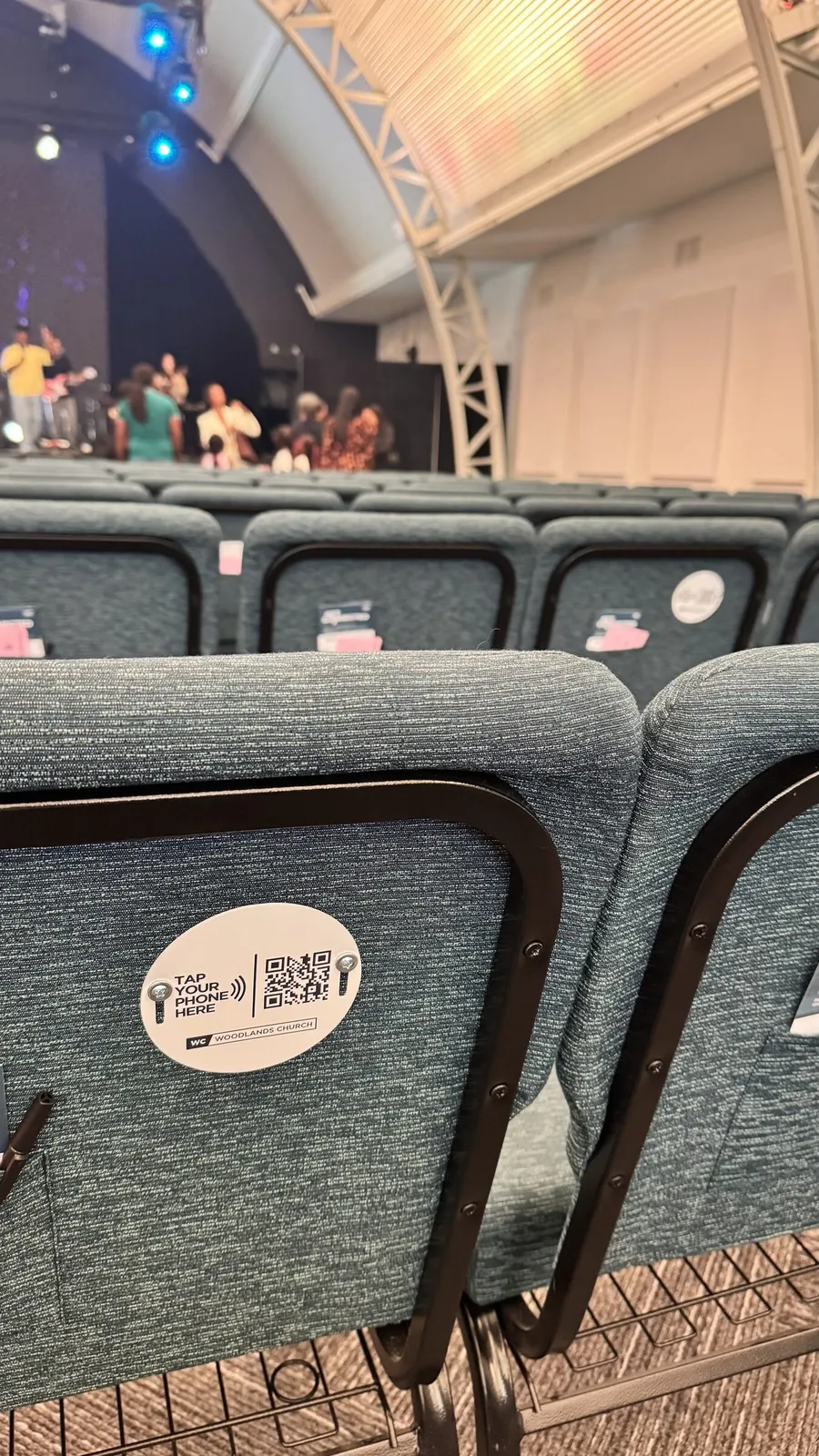
Most churches think of giving as a Sunday morning activity. But summer is full of opportunities to invite generosity outside the worship service, if you have the right tools in place. NFC tap-to-give plates work anywhere a phone can reach them. No Wi-Fi required. No special lighting. No app download.
VBS Check-In Station
Parents drop off kids at VBS every day for a week. Mount an NFC plate at the check-in table with a sign: “Tap to support this week’s VBS.” Parents are grateful, engaged, and have their phones in hand. That’s five giving touchpoints you didn’t have before.
Outdoor Services & Events
Summer worship in the park. Church picnic. Community block party. NFC plates work in full sunlight (unlike QR codes, which struggle with glare). Attach one to a portable stand or a table display. No power outlet needed. No tablet to charge.
Summer Camp & Retreats
Youth camp, women’s retreat, men’s weekend, these are high-engagement, high-emotion moments. An NFC plate at the worship station or meal area lets attendees give in the moment, when their hearts are moved. No offering basket required.
Lobby & Welcome Center
Even on Sundays, not everyone gives during the offering moment. A plate in the lobby catches people on the way in or out. Visitors who weren’t ready during the service get a second chance without any pressure.
A Children’s Pastor’s VBS Discovery
Picture this: Pastor Sarah runs VBS for 200 kids every June. The program costs $3,000 in supplies, snacks, and decorations. In past years, the church just absorbed the cost. This year, she placed an NFC plate at the parent check-in table with a simple sign: “Love VBS? Tap to help fund it.”
Over five days, 47 parents tapped and gave. Average gift: $35. Total: $1,645, covering more than half the VBS budget from a giving touchpoint that didn’t exist the year before. No special announcement. No awkward ask from the pulpit. Just a plate and a moment of gratitude.
The principle is straightforward: the more places people can give, the more they give. A church with 100 NFC plates doesn’t need all 100 on pews. Reserve 10-15 for VBS tables, lobby displays, camp registration desks, and event stations. That $50 to $75 investment in extra plates can return thousands in summer giving that would have otherwise been zero.
5. Strategy 3: Run a Summer Giving Campaign
A giving campaign gives people a reason to give beyond the weekly offering. It creates urgency, specificity, and a sense of shared purpose, exactly what summer giving needs.
The most effective summer campaigns tie giving to something tangible and time-bound. Not “please keep giving this summer” (which sounds desperate) but “here’s a specific thing we’re funding, and here’s how close we are.”
Summer Campaign Ideas That Work
Building Fund Push
“Help us finish the youth room renovation before fall kickoff.” Thermometer-style progress tracker on screen each Sunday.
Mission Trip Matching
“Every dollar given this month is matched 1:1 for our Guatemala mission team.” Matching creates urgency and doubles impact.
VBS Sponsorship
“$15 sponsors one child for VBS week.” Specific, tangible, easy to say yes to. Parents especially respond.
Community Outreach Fund
“We’re feeding 50 families every week this summer through our food pantry.” Local impact stories drive local giving.
The campaign doesn’t replace regular tithes and offerings. It supplements them and gives people who might otherwise skip giving in the summer a specific reason to participate. When someone taps an NFC plate during VBS and the giving page says “VBS Sponsorship, $15 per child,” they’re not thinking about the general fund. They’re thinking about the kid they just dropped off.
6. Strategies 4-7: Mid-Week Touchpoints, VBS, Digital Reminders, and Transparency
Create Mid-Week Giving Touchpoints
Sunday morning isn’t the only time your church building has traffic. Small groups, Wednesday night services, youth group, choir practice, support groups, these are all opportunities. An NFC plate mounted near the door of your most-used meeting room costs $5.00 and creates a giving touchpoint every time someone walks by.
Summer small groups are especially powerful. The intimate setting and the relational trust make people more responsive to giving prompts. A plate on the coffee table at a home group meeting isn’t pushy, it’s just present.
Make VBS a Giving Moment
VBS is often the largest event your church runs all summer. Hundreds of families walk through your doors during a week when Sunday attendance is low. These parents are engaged, grateful, and already in your building. Don’t waste that opportunity.
Place NFC plates at check-in, check-out, and the parent waiting area. Use signage that connects giving to the experience: “Your child loved VBS today. Tap to help us do it again next year.” This works because the ask is grateful, specific, and happens when the parent is feeling positive about your church.
Send Digital Giving Reminders (Without Being Pushy)
A short mid-week email or text doesn’t need to say “please give.” Instead, share a story. “This week, your generosity helped send 12 students to camp. Here’s a photo.” Include a direct link to your giving page. People give when they see impact, not when they feel guilt.
Best practice: one giving-related email per month during summer. Pair it with a story or update, never a standalone ask. The families on vacation will see it and be reminded that the church they love is still doing good work.
Be Transparent About the Summer Budget Reality
Church leaders often avoid talking about money in the summer because it feels desperate. But your congregation wants to help, they just need to know there’s a need. A brief, honest update goes a long way.
“Our summer budget is $X per week. Last week we received $Y. We’re $Z short of what we need to keep all our summer programs running.” That’s not guilt. That’s stewardship. Pair it with the easy action: “Tap the plate on your way out, or visit our giving page from anywhere.”
7. Your Summer Giving Prep Timeline
The churches that survive summer with their budgets intact are the ones that prepare in spring. Here’s a week-by-week timeline you can start today.
Lay the Groundwork
Order NFC plates (allow 2-3 weeks for delivery). Begin recurring giving enrollment push from the pulpit. Plan your summer giving campaign theme.
Install & Launch
Mount NFC plates on pews, lobby, and VBS stations. Continue recurring giving push. Send first email about summer giving campaign. Set a specific goal and share it.
Activate VBS & Events
Deploy NFC plates at VBS check-in. Launch summer campaign. Share weekly progress updates. Send first impact story email to the full congregation.
Maintain & Communicate
Share budget updates transparently. Move NFC plates to camps, retreats, and outdoor events. Send monthly impact emails. Thank recurring givers publicly. Celebrate progress toward campaign goal.
A Church That Beat the Summer Slump
Consider a mid-size church of 350 that dreaded summer budgets every year. Giving would drop from $12,000/week to $8,500/week by July, a 29% decline that forced them to cut summer programming and delay maintenance projects.
In spring, they took three steps: enrolled 60 families in recurring giving during an April push, installed NFC plates in pews and at their VBS check-in station, and ran a “Summer Strong” campaign tied to their food pantry ministry.
Result: July giving dropped to only $10,800/week, a 10% decline instead of 29%. The recurring givers provided a stable $6,200/week floor. NFC plates at VBS added $2,100 over the week. And the campaign gave vacation-goers a reason to give from the beach. They fully funded every summer program for the first time in five years.
8. FAQ: Summer Church Giving Slump
How much does church giving drop in the summer?
Most churches see a 15-25% decrease in weekly giving between June and August. The drop closely tracks attendance, which typically falls 20-30% during summer months. Churches without recurring giving options or physical giving touchpoints beyond Sunday morning tend to experience the steepest declines.
What is the best way to prevent the summer giving slump?
The most effective approach combines recurring giving enrollment with physical giving touchpoints that work beyond Sunday morning. NFC tap-to-give plates placed at VBS, summer camps, outdoor services, and lobby areas capture giving opportunities that only exist during the week. Churches that push recurring giving enrollment in April and May see the most consistent revenue through summer.
Do NFC tap-to-give plates work at outdoor church events?
Yes. NFC plates work anywhere a phone can reach them, indoors or outdoors, in any lighting, and without Wi-Fi (the phone uses its own cellular connection after the tap). This makes them ideal for outdoor services, VBS stations, community events, and summer camps where QR codes struggle with glare and kiosks are impractical.
When should churches start preparing for the summer giving slump?
Start in April or May. Launch a recurring giving enrollment push 6-8 weeks before summer begins. Order NFC plates with enough lead time for delivery and installation before Memorial Day weekend, which typically marks the start of the attendance decline. Churches that prepare in spring maintain significantly more consistent giving through summer than those that react in July.
Don’t Let Summer Drain Your Church Budget
The summer church giving slump is real, but it isn’t inevitable. Churches that combine recurring giving, physical NFC touchpoints, targeted campaigns, and transparent communication don’t just survive summer, they maintain the momentum they need to fund every ministry, every week, all year long.
And the same touchpoints keep working after Labor Day. The recurring enrollments and the plates you set up for summer carry you through the fall attendance recovery and straight into the biggest giving window of the church year: November and December. If you get the giving path frictionless now, you walk into year-end giving season with the hard part already done.
The time to prepare is now. April and May are your window. Enroll recurring givers. Order your plates. Plan your campaign. When Memorial Day arrives, you’ll be ready, and your budget will thank you in August.
Get NFC plates before summer starts
100 plates. $500. Free shipping. No monthly fees. Ready for VBS, camps, and every summer event.
Start a quote to get 10% off for 7 days
Related Articles
How to Increase Online Giving at Your Church
Recurring givers donate 42% more annually. Learn how to boost digital giving with NFC, recurring options, and smart strategy.
InsightsThe Complete Church Giving Technology Guide
Every giving technology option for churches, compared side by side. Find the right fit for your budget and congregation.
InsightsNFC Giving ROI: The Numbers Behind Tap-to-Give
less friction, higher in-service participation, and fewer steps than a QR code. See the full ROI breakdown.