7 Ways to Increase In-Service Giving Without Being Pushy
Most churches leave money on the table every Sunday, not because people don’t want to give, but because the moment passes too quickly, the method is unclear, or the ask feels awkward. Here are seven practical ways to change that without turning your service into a fundraiser.
See your church's plate and price in 30 seconds
Design it yourself on the next page. From $3.50 per plate, free shipping, no monthly fees.
1. Make Giving Visible and Frictionless
The single biggest barrier to in-service giving is not unwillingness, it’s friction. When someone feels moved to give, the window is short. If the giving method requires downloading an app, typing a URL, or searching for a text-to-give number, many people simply move on. The moment passes. The gift never happens.
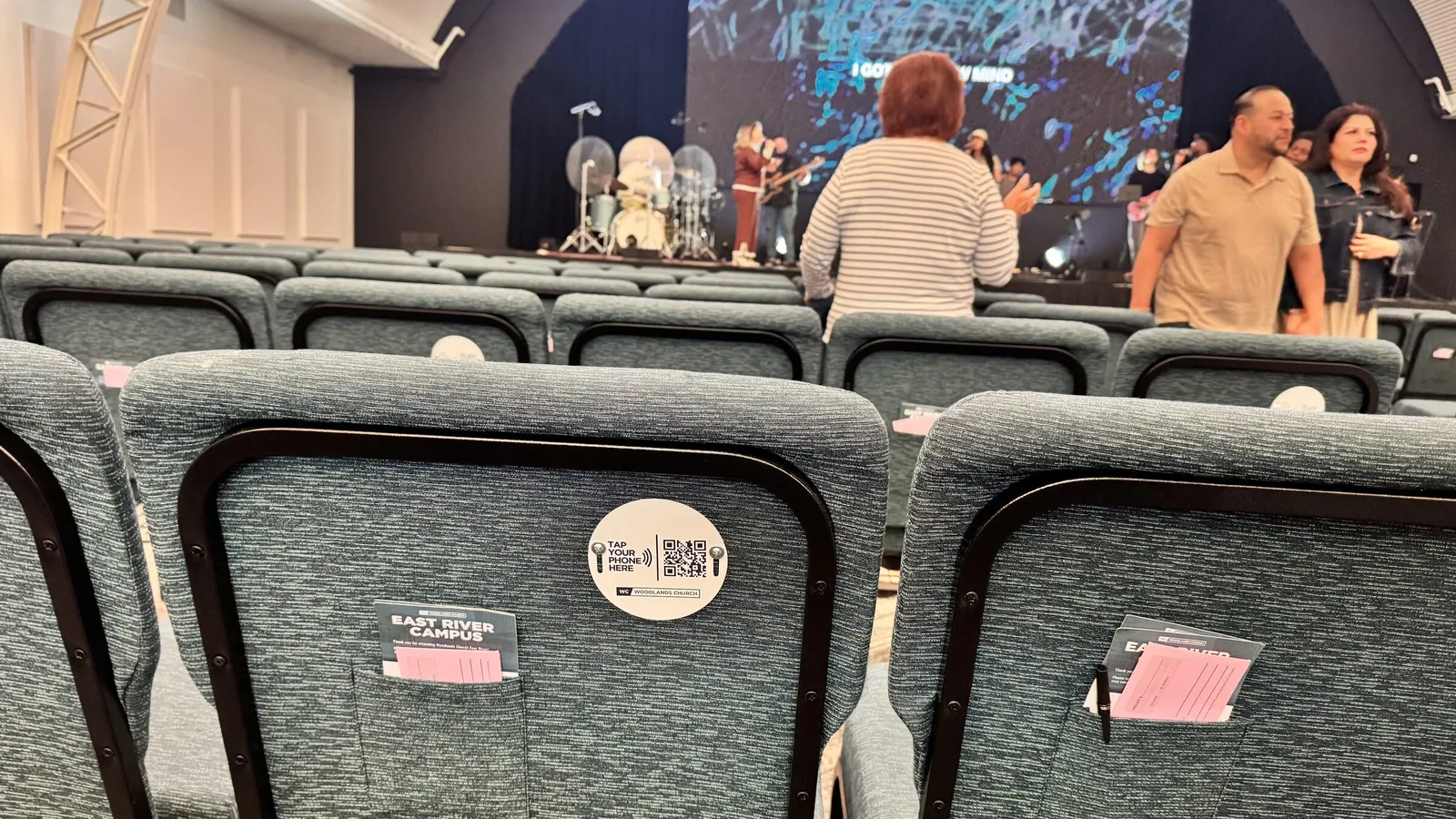
The fix is physical presence. Giving options should be visible on every seat or pew, within arm’s reach, before anyone asks for a donation. NFC tap-to-give plates mounted on pew backs or chair arms put a giving touchpoint directly in front of every person in the room. When someone taps their phone to the plate, their church’s giving page opens instantly in the browser, no app download, no account creation, no friction. Churches using NFC plates report up to less friction in giving participation because the barrier between impulse and action virtually disappears.
Practical Tip
Walk through your sanctuary as if you’re a first-time visitor. Can you see a way to give from every seat without pulling out your phone and searching for instructions? If not, you have a visibility problem. The giving method should be as obvious as the songbook holder or the seat cushion, a permanent, always-available fixture.
QR codes on screens or printed in bulletins are a step in the right direction, but they require the person to open their camera, frame the code, and wait for the link. NFC is fewer steps than a QR code for engagement because it collapses that process into a single tap. The less someone has to think about how to give, the more likely they are to follow through on the desire to give.
2. Normalize the Moment with a Brief, Warm Invitation
Every pastor has been on the receiving end of an offering talk that made the room tense. The long pause. The guilt-laden statistics about the building fund. The third reminder that “God loves a cheerful giver.” These moments do not inspire generosity, they create resistance. People shut down when they feel manipulated, even if the cause is legitimate.
The alternative is a 15-20 second invitation that is warm, grateful, and matter-of-fact. Something like: “If you’d like to give today, you can tap the plate on your seat, drop cash in the basket, or give online at our website. We’re grateful for your generosity, it makes everything we do here possible.” That’s it. No emotional manipulation. No extended pause. No guilt. Just a clear, brief statement that giving is available and appreciated.
Sample 15-Second Script
“Before we close, I want to give you a moment to respond. If you’d like to give, just tap the plate on your pew, use the giving link on screen, or drop something in the basket as it comes around. Thank you for your generosity, it’s changing lives in this community.”
Brevity communicates confidence. When the pastor spends 15 seconds on giving instead of five minutes, it signals that the church trusts its people and doesn’t need to beg. That confidence is contagious. People give more freely when they don’t feel pressured, and a short, warm invitation normalizes giving as a natural part of worship rather than an interruption to it.
3. Offer Multiple Giving Methods Simultaneously
Your congregation is not a monolith. You have retirees who write checks, young professionals who haven’t carried cash in years, teenagers who do everything on their phones, and visitors who know nothing about your giving systems. If you only offer one or two giving methods, you are leaving out a significant portion of the people in the room. 60% of churchgoers say they are willing to give digitally if the option is available, but that also means 40% still prefer traditional methods.
Cash & Check
Still the most familiar method for many congregants, especially older members. Pass a plate or basket so cash givers always have a way to participate. Never eliminate this option.
NFC Tap-to-Give
NFC plates on every seat let anyone give with a single tap. No app, no account, no typing. Churches see 3x higher average donations compared to cash because digital givers tend to give more.
Text-to-Give
Display your text-to-give number on screen during the offering moment. It catches people who are already looking at the projection and prefer a familiar SMS workflow.
Online Giving Page
A short, memorable URL or QR code on the screen gives people a browser-based option. This also serves those watching the livestream from home who want to give in real time.
The key is to mention all available methods in your brief giving invitation. “You can tap the plate on your seat, text ‘GIVE’ to our number on screen, use the link in our app, or drop cash in the basket.” One sentence, four options, zero people left out. Offering multiple channels simultaneously shows respect for your congregation’s diversity and removes excuses.
4. Time the Ask After the Sermon, Not Before
There is a reason every great fundraiser puts the donation appeal after the keynote speech, not before it. Emotional connection drives generosity. When your congregation has just heard a message about God’s faithfulness, or the impact your church is making in the community, or the power of sacrificial love, they are in a completely different headspace than they were during the announcements at the top of the service.
A pre-sermon offering interrupts the flow. People are still settling in, checking their phones, finding their seats. They haven’t been spiritually engaged yet. Placing the giving moment after the sermon, or even woven into the response time, lets the message do its work first. The ask becomes a natural response to what people have just experienced, not a cold transaction before the service has even started.
Worth Testing
If your church currently takes the offering before or during the sermon, try moving it to immediately after the message for four to six weeks. Track your giving totals and compare. Many churches that make this switch see a measurable increase, not because they asked for more, but because they asked at the right time.
This also works well with NFC plates mounted on seats. Because the plates are always there, people can give at any point during the service, but a post-sermon invitation creates a natural prompt. The tap happens in the moment of response, when generosity feels organic rather than obligatory.
5. Share Impact Stories, Not Budget Numbers
“We need to hit our $50,000 monthly budget” is a factual statement. It is also a terrible motivator for giving. Budget numbers feel abstract and institutional. They create a sense of obligation, “the church needs money”, rather than inspiration. People don’t get excited about keeping the lights on. They get excited about changing lives.
Compare that with: “Last month, your generosity funded 200 meals for families in our neighborhood.” Or: “Because of your giving, 14 students went on their first mission trip this spring.” Or even: “A single mom in our community told us this week that your support through our benevolence fund kept her family in their home.” These are stories, not spreadsheets. They connect the giver to the impact of their gift in a way that a budget line item never can.
Instead of This
“We’re $8,000 short on our monthly budget. We really need everyone to step up this month to cover our operational costs.”
Try This
“This month your giving helped us serve 200 meals, support three families facing eviction, and send our youth group to serve in a neighboring city. Thank you. When you give today, more of that happens.”
Make impact storytelling a habit. Dedicate 30 seconds before the giving moment to a real, specific story. Rotate stories across different ministries, kids, outreach, missions, benevolence, so givers see the full breadth of what their generosity enables. When people understand where their money goes, the giving moment stops feeling like a bill payment and starts feeling like a partnership.
6. Make the First Gift Ridiculously Easy
The first gift is the hardest. A visitor or infrequent attendee who decides to give for the first time faces an invisible wall of friction: Do I need to create an account? Do I need to download something? How many fields do I have to fill out? Is this secure? Every step between the decision to give and the completed transaction is a chance for them to abandon the process. If your giving platform requires a login, a multi-step form, or an app download, you are losing first-time givers before they finish.
The gold standard is a one-tap experience. NFC tap-to-give plates accomplish this by opening the church’s giving page directly in the phone’s browser, no app, no account, no typing a URL. The giver enters an amount, taps Apple Pay or Google Pay, and they’re done. Churches using this approach see higher in-service participation because the process feels identical to paying at a coffee shop. That familiarity matters enormously for someone giving to a church for the first time.
Audit Your Giving Flow
Pull out your phone right now and try to give to your own church as if you’ve never done it before. Count the steps. Count the fields. Time yourself. If it takes more than 30 seconds from first tap to completed gift, your first-time givers are dropping off. Every field you can eliminate, every screen you can remove, increases your completion rate.
If your giving platform requires account creation for first-time gifts, consider whether a guest checkout option is available. Many platforms like Tithely, Givelify, and Donorbox support browser-based giving without requiring a login. Pair that with NFC plates that link directly to the giving page, and you have eliminated every barrier between a visitor’s generous impulse and their completed donation.
7. Follow Up with First-Time Givers Within 48 Hours
The offering moment is not the finish line, it’s the starting line. When someone gives to your church for the first time, a relationship has begun. What happens in the 48 hours after that gift determines whether it becomes a habit or a one-time event. Most churches do nothing. The giver receives an automated receipt and never hears from the church again. That silence communicates indifference, even if it’s unintentional.
A personal follow-up within 48 hours changes everything. It doesn’t need to be elaborate. A short email from the pastor, “Thank you for your gift this Sunday. Your generosity matters to us and to the families we serve. We’re glad you were here.”, takes two minutes and makes the giver feel seen. A brief text message works just as well. The medium matters less than the timing and the tone: prompt, personal, and genuinely grateful.
Within 24 Hours
Send a personal thank-you email from the pastor. Short, warm, specific. Not a generic receipt.
Within 48 Hours
Follow up with a text or second touch that invites them to connect further, a small group, a next-steps class, or simply Sunday again.
Within 7 Days
Share one impact story, a brief update on what the church accomplished that week. Reinforce that their gift made a difference.
The churches that grow their giving year over year are not the ones that make the best Sunday morning pitch. They are the ones that treat every first-time gift as the beginning of a conversation. A thank-you that arrives before the next Sunday turns a generous impulse into a committed relationship. That follow-up is where one-time givers become recurring givers, and where your in-service giving compounds over time.
Bringing It All Together
None of these seven strategies require a bigger budget, a more charismatic pastor, or a guilt-laden appeal. They require intentionality. Make giving visible and effortless. Keep the invitation brief and warm. Offer multiple methods. Time the ask wisely. Tell stories that connect givers to impact. Remove every barrier from the first gift. And follow up like the relationship matters, because it does.
The churches that see the strongest in-service giving are not the ones that pressure people the hardest. They are the ones that make generosity the easiest, most natural response to what God is doing in their community. Start with one or two of these strategies this Sunday. Add the rest over time. Your congregation wants to give, your job is to get out of their way.
Quick Reference: The 7 Strategies
Ready to Make In-Service Giving Effortless?
Start with the strategy that has the highest ROI: NFC tap-to-give on every seat. 100 plates. $500. No monthly fees. Works with your existing giving platform.
Start a quote to get 10% off for 7 days.
Frequently Asked Questions
How do I increase church giving during service without making people uncomfortable?
Focus on removing friction instead of adding pressure. Make giving options visible on every seat, NFC tap plates, QR codes, or text-to-give numbers, so people can give quietly on their own terms. Keep the verbal invitation to 15-20 seconds, warm and grateful rather than guilt-driven. Share a quick impact story instead of budget numbers. When giving is easy and the motivation is clear, people respond without feeling pressured.
When is the best time during a service to take the offering?
Research and pastoral experience both suggest placing the giving moment after the sermon rather than before it. After the message, people feel emotionally connected to the mission and more naturally inclined to respond with generosity. A pre-sermon offering often interrupts the flow and catches people before they have been spiritually engaged. If your church currently places giving before the sermon, consider testing a post-sermon placement for four to six weeks and comparing the results.
What giving methods should a church offer during service?
Offer at least three to four methods simultaneously: a traditional plate or basket for cash and checks, NFC tap-to-give plates on every seat for smartphone users, a text-to-give number displayed on screen, and a link to your online giving page. Different generations and comfort levels prefer different methods. The goal is to meet every person where they are so no one has an excuse not to give.
How important is following up with first-time givers?
Extremely important. A first-time gift is the beginning of a relationship, not the end of a transaction. Churches that send a personal thank-you within 48 hours see significantly higher rates of repeat giving. The follow-up does not need to be elaborate, a short email or text from the pastor expressing genuine gratitude is enough. The goal is to make the giver feel seen and appreciated so the one-time gift becomes a habit.
Do NFC tap-to-give plates really increase church donations?
Yes. Churches that add NFC tap plates report less friction in giving participation and 3x higher average donations compared to cash. NFC is fewer steps than a QR code for engagement because it requires no scanning, no app, and no typing. The giver simply holds their phone near the plate and the church’s giving page opens instantly. It is the lowest-friction digital giving method available.
Related Articles
How to Increase Online Giving at Your Church
A comprehensive guide to boosting digital donations with practical strategies that work for churches of any size.
StrategyFirst-Time Visitors to First-Time Givers
How to convert guests into donors from their very first visit, without apps, accounts, or friction.
Best PracticesThe Modern Offering Plate: How Churches Are Upgrading
The offering plate is evolving. Learn how churches are moving from brass plates to NFC tap-to-give technology.