Bloomerang vs Tap.Giving: 2026 Cost for Churches
Bloomerang is a donor CRM with payments attached, billed monthly and sold as modular products (roughly $40 to $242+ per month from public 2026 pricing, depending on which pieces you need). Tap.Giving sells one-time NFC tap plates from $3.50 each that open the giving page you already run. A 200-seat church pays about $800 once for plates, and the two products solve different problems. Most churches that look at both end up using them together.
Is Bloomerang or Tap.Giving Right for My Church?
If your church needs a real donor CRM with retention analytics and major-gift workflows, Bloomerang is a strong choice, and tap plates do not replace it. Add Tap.Giving plates when the goal is the giving moment itself: making it effortless to give before the offering passes. The two are not in tension. The plate points at your Bloomerang giving form, the gift still records in Bloomerang, and your reporting stays exactly where it is. Most churches that compare the two end up keeping Bloomerang and adding plates as a one-time hardware layer on top.
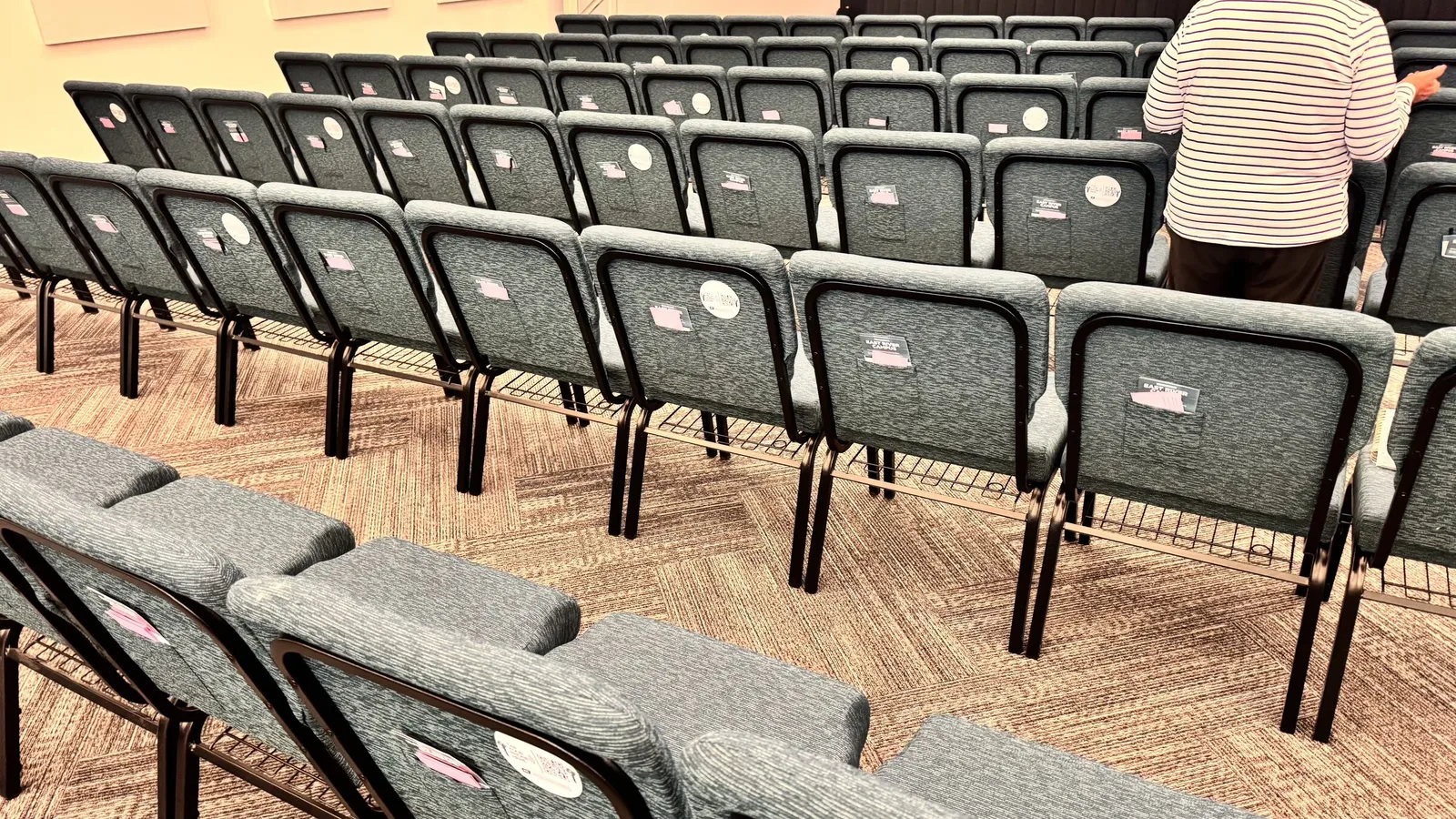
$800 once
What 200 NFC tap plates cost a 200-seat church. Bloomerang's mid plan keeps billing every month for as long as you use it; plates do not.
See your church's plate and price in 30 seconds
Design it yourself on the next page. From $3.50 per plate, free shipping, no monthly fees.
Bloomerang Pricing in 2026: What a Church Actually Pays
Let me be clear up front, because it shapes the rest of the comparison: Bloomerang is not really a giving platform. It is a donor management database, a CRM, with online giving and payments bolted on (Bloomerang Payments). Churches that pick it usually want what a CRM does: a clean donor record, retention reporting, segmentation, major-gift cultivation, and acknowledgements out of one system. That is a different job than a tap on the pew.
Bloomerang has moved away from record-count tiers to a modular product model. As of 2026, standalone CRM starts at $125/month, standalone Fundraising starts at $40/month (sold together with CRM), and the full Giving Platform bundle (fundraising, CRM, volunteer management, and AI insights) starts at $242/month, billed annually. Check the current Bloomerang pricing page before budgeting; plans and prices change.
The shape of the cost matters more than the exact tier. A subscription is something you carry every month, for years. That is fine when the software is earning its keep with donor data and reporting work that would otherwise be manual. It is worth being honest about when the question is narrower, like how to make giving effortless during the offering. For that single moment, a one-time piece of hardware competes with a recurring line item.
Where Bloomerang Stops Short for In-Pew Giving
Bloomerang's giving forms are good. They are responsive, they accept Apple Pay and Google Pay on most setups, and the gift records cleanly in the donor database. The shortfall is not the page; it is reaching the page in 30 seconds while the offering passes the third row. The friction is not technical, it is physical. A guest is not going to hunt for a URL in a bulletin, and a longtime member is not going to fumble through bookmarks. Most just wait for next time and forget.
The numbers are stark. Those are real numbers from the field, not a sales deck.
None of that is a knock on Bloomerang. The giving page can be excellent and still be hard to reach in the moment. NFC giving fixes the reaching, not the page. That is the whole idea behind how tap to give works for churches: a shortcut to the giving page you already have, not a replacement for it.
Bloomerang vs Tap.Giving: 5-Year Cost
Here is a five-year view for a 200-seat church, using Bloomerang's full Giving Platform bundle (starting at $242 per month, from public 2026 pricing) against 200 NFC tap plates at $4.00 each. These are different kinds of products, so read the table for the shape of the cost. Transaction fees are excluded because both paths run gifts through the same kind of processor (2.9% + $0.30 in either direction).
| Cost line | Bloomerang Standard (CRM + payments) | Tap.Giving (200 NFC tap plates) |
|---|---|---|
| Setup fee | $0 advertised | $0 |
| One-time hardware | None | $800 (200 x $4.00) |
| Monthly cost | ~$242/mo | $0 |
| Year 1 total | ~$2,904 | $800 |
| Year 5 (cumulative) | ~$14,520 | $800 |
| Recurring after year 5? | Yes, keeps billing | No, you own the plates |
The honest read: Bloomerang's $21,540 over five years buys a full donor CRM with retention reporting and major-gift workflows. That is not wasted spend if your church actually needs that infrastructure. But if the question is in-pew tap to give specifically, $800 once does the job and never bills again. Hardware costs you once; software costs you on a schedule. Our breakdown of the hidden costs of church giving platforms walks through the same math for several other platforms.
Feature Comparison at a Glance
Because Bloomerang and Tap.Giving solve different problems, the table below is less about “better” and more about which need each product meets. A church that uses both gets the full row of green.
| Capability | Bloomerang | Tap.Giving |
|---|---|---|
| Donor database (CRM) | Yes | No (hardware only) |
| Retention and reporting | Yes | Uses your existing tools |
| Online and recurring giving | Yes (Bloomerang Payments) | Uses your existing page |
| In-pew NFC tap to give | No | Yes |
| No app required for givers | Page based | Yes, browser only |
| Monthly fee | ~$40 to $242+/mo | $0 |
| Transaction fee from this vendor | ~2.9% + $0.30 | $0 |
| Platform-agnostic hardware | N/A | Yes |
For side-by-sides with other donor and management systems, our Breeze ChMS vs Tap.Giving and Realm Connect vs Tap.Giving comparisons follow the same shape: keep the software, add the plates.
How Tap.Giving Works With Bloomerang
The cleanest setup, if you already pay for Bloomerang, is to keep it and point NFC tap plates at your existing Bloomerang giving form. The plate becomes the physical front door to the page you already maintain, and every gift lands in the donor database with the same record-keeping you have today.
The setup, start to finish
- Copy your Bloomerang giving form URL (the mobile-friendly link a guest can open without logging in).
- Order plates, one per seat is the rule of thumb, and send us your logo as a vector file plus that giving URL.
- We program each plate to open your Bloomerang giving page and ship a proof for approval first.
- Mount the plates with the adhesive back or screws.
- Demo one tap from the stage on a Sunday so members and guests know what the plate does.
Because the plate is just a programmed web address, this is the same approach we document for every platform. NFC giving works with Bloomerang, Tithely, Pushpay, Subsplash, Donorbox, Givelify, Anedot, and Planning Center Giving alike. The chip does not care which giving page is on the other end of the URL, only that there is one. For the deeper technical version, our NFC giving explained guide covers chip standards, locking, and phone compatibility.
A quick note on terminology, because searchers use a dozen names for this: tap to give, tap to donate, tap and give, contactless giving, church NFC tags, and tap tags for churches all describe the same idea. Tap.Giving sells the church NFC tags in plate form, designed for the offering rather than a generic sticker on a kiosk. If you want the wider landscape, our church giving technology guide is a good starting point.
Add tap-to-give to your Bloomerang setup
Keep Bloomerang for everything it does well as a donor CRM. Add one-time NFC tap plates so members can tap to donate in the pew, with no monthly fees and no transaction fees from us. Most churches are tapping by week three.
Start a quote to get 10% off for 7 days
When Bloomerang Is the Right Call
We are hardware, not software, so this is easy to say honestly: if your church needs a real donor CRM with retention analytics and major-gift workflows, Bloomerang is a strong choice, and tap plates do not replace it. Pick Bloomerang (or stay on it) when your team needs segmented donor lists, lapsed-donor reporting, gift moves management, and acknowledgement workflows that go beyond a basic giving platform.
Add Tap.Giving plates when the goal is the giving moment itself: making it effortless for someone in the third row, or a first-time guest, to give before the offering passes. The two decisions are not in tension. The plate points at your Bloomerang giving form, the gift records in Bloomerang, your reporting stays in Bloomerang. You are choosing a one-time hardware layer on top of the software you already pay for. A 150-seat church can test the idea for 150plates x $5.00 = $750 one-time, free shipping. For context on the wider donor-retention picture, Bloomerang's own donor retention research is a useful read.
If you are still mapping the wider field, our Planning Center Giving vs Tap.Giving and Givebutter vs Tap.Giving comparisons walk through the same trade-off from different angles. The how it works page and the NFC FAQ answer the device questions most boards ask, and our about page covers why a pastor built this for churches in the first place.
FAQ: Bloomerang and Tap-to-Give
Is Bloomerang built for churches?
Bloomerang is donor management software built for the broader nonprofit market, and a meaningful slice of its customers are churches that need a CRM-style view of donor history, retention, and major-gift cultivation. It is not a giving platform first; it is a donor database with giving features added through Bloomerang Payments. That is a different shape of product than a Tithely or a Pushpay, and very different from NFC tap plates that simply open a giving page.
How much does Bloomerang cost a church in 2026?
Bloomerang has moved away from record-count tiers to a modular product model. As of 2026, standalone CRM starts at $125/month, standalone Fundraising starts at $40/month (sold together with CRM), and the full Giving Platform bundle starts at $242/month, billed annually. A church should read the current Bloomerang pricing page before budgeting, since plans and prices change.
Do NFC tap plates work with Bloomerang?
Yes. Tap.Giving plates open any mobile-friendly URL, including a Bloomerang giving form. When you order, you send us the giving link you want each plate encoded with, and a tap opens that exact page in the giver's browser. The donation runs through Bloomerang Payments exactly as it would if the giver had typed the URL themselves. See our tap to give platform comparison for the full list of platforms we encode for.
Does Tap.Giving replace Bloomerang?
No. Bloomerang is a donor CRM with payments attached. Tap.Giving is hardware: NFC tap plates that open the giving page you already run. Churches that need donor records, retention reporting, and major-gift workflows keep Bloomerang. Plates are an inexpensive layer on top so members can tap to give in the pew without hunting for a URL.
How much do Tap.Giving plates cost?
Tap.Giving plates are a one-time purchase: $5.00 each for 100 to 199 plates, $4.00 each for 200 to 399, and $3.50 each for 400 or more. Shipping is free, there are no monthly fees, and the first-order discount is 10% for 7 days from the quote. A 200-seat church pays about $800 once. See the full table on our pricing page.
Will plates change Bloomerang's reporting?
No. Because plates point at your existing Bloomerang giving page, every gift still lands in Bloomerang with its normal donor record, soft credit, fund designation, and acknowledgement workflow. The plate is a shortcut to the page, not a parallel system. Your reporting, retention analytics, and contribution statements stay exactly where they are.
How long until plates arrive?
Plan on 2-3 weeks. Production runs about a week and shipping takes another week or two. Shipping is free, and most churches time the order so plates are mounted before a stewardship season or a holiday like Easter or Christmas Eve.
Related Articles
Breeze ChMS Giving vs Tap.Giving
Another donor-database style comparison: keep the software you like, add one-time plates for in-pew tap to give.
GuideThe Hidden Costs of Church Giving Platforms
Where monthly subscriptions and per-transaction fees quietly add up over a five-year window.
ComparisonChurchTrac vs Tap.Giving: 5-Year Cost
Same trade-off with a low-cost ChMS: one-time hardware vs a small recurring subscription.