The Church Year-End Giving Guide: Your November to January Playbook
Close to a third of a church's annual giving arrives in the last six weeks of the year, and a big slice of that on the final few days. The churches that steward it well do not scramble in late December. They plan in October, invite generously through November and December, and follow up in January. Here is the whole playbook, written for pastors.
Why does so much church giving land in the last six weeks of the year?
Nonprofit giving research has found for years that close to 30% of annual charitable giving happens in December, with a striking share arriving in the final three days. You can see the pattern in the Blackbaud Institute Charitable Giving Report, which tracks how heavily online giving concentrates at year-end. Churches ride the same wave.
Three things stack up at once. Gratitude runs high around the holidays. Families feel the pull to be generous while they are thinking about home and faith. And givers who itemize want their tax-deductible gifts recorded before January 1. None of that is cynical. It is simply the shape of the year, and it is predictable enough to plan around.
Put a number on it for your own church. A congregation with a $300,000 annual budget that sees a normal 30% December is watching roughly $90,000 move in a single month. A strong year-end covers January and February, when attendance dips and offerings sag. A weak one starts the new year in a hole. That is the stakes, and it is why the six weeks deserve a plan rather than a hope.
When should your church start its year-end push?
Plan in October, and start speaking publicly by the second week of November. The mistake almost every church makes is waiting until the Sunday after Christmas, when half the congregation is traveling and the other half has stopped checking email.
People need to hear an invitation several times before they act on it, and December calendars fill fast. If the first your people hear of a year-end opportunity is December 28, you have reached almost no one. Give the message room to land: name it in mid-November, weave it through Advent, and make the final week a clear, warm reminder rather than a cold ask.
This is the same lesson churches learn the hard way every summer, when giving dips because nobody planned for the season. If you want the summer version of this argument, we wrote it up in why church giving drops in summer and what to do about it. Year-end is the mirror image: a predictable swing you can prepare for instead of react to.
What should you say from the platform without it feeling like a fundraiser?
Frame it as an invitation to generosity, not a plea to cover a shortfall. People give to vision, not to deficits. The most trusted year-end word from a pastor names what God did through the church this year, points to what is next, thanks people plainly, and makes the how of giving simple.
Here is a two-minute version you can adapt:
This year your generosity fed families through our pantry, sent our students to camp, and kept the lights on for a congregation that calls this place home. As the year closes, I want to invite you to give thanks the way God has wired us to, by being generous. If you are able to make a year-end gift, it will be received with gratitude and put straight to work. Giving takes about thirty seconds today, and I will show you exactly how.
Notice what it does not do. It does not mention a budget gap, it does not guilt anyone, and it does not run five minutes. Two clear minutes said with gratitude will out-give a long, anxious appeal every time. If the idea of talking about money at all makes you tense, you are not alone, and there is a gentler way to do it that we lay out in how to increase online giving at your church.
How do year-end giving statements fit into the plan?
Send giving statements in early January, and treat them as a stewardship tool, not a receipt. A statement is one of the few pieces of mail a member opens carefully, so it is a chance to say thank you and to remind people what their giving made possible.
Pair the numbers with a short letter. Recap the year in three or four sentences, thank the household by name, and point to one thing the coming year holds. If you want the letter written for you, we published a copy-and-paste year-end giving letter template for churches you can adapt in ten minutes.
One practical note on timing. Most givers who itemize want their December gifts on the current tax year, so make sure your platform's cutoff is clear. Gifts that settle on December 31 count for that year; a check that arrives January 2 does not. Say this plainly in your final-week reminder so nobody is surprised.
How do you keep the givers you gained at year-end?
The cheapest growth a church has is keeping the people who already gave once. A first-time year-end giver is a gift and a risk: they showed up, and most of them will never give again unless someone reaches out.
In the first two weeks of January, thank every new giver personally, not with a mass email. A short note or a two-line text from a real person is enough. Then invite them to set up recurring giving, which is the single move that turns a one-time December gift into a steady rhythm. A member who gives monthly gives more over a year and thinks about it less.
This follow-up is where most churches quietly leak the ground they gained. If you build the January habit of thanking and inviting, next year's year-end starts from a higher floor.
The week-by-week year-end plan
Here is the whole thing on one page. Adjust the dates to your calendar, but keep the order.
- Mid-October: Decide the theme and the one line you want people to remember. Confirm your giving platform's year-end cutoff and that your mobile giving page works on a phone.
- Early November: Write the year-recap letter and the giving-statement letter now, while you have time to make them warm instead of rushed.
- Second week of November: Name the year-end invitation publicly for the first time, from the platform and in one email.
- Advent Sundays: Weave gratitude and generosity into the season. Demonstrate exactly how to give once, from the stage, so nobody is guessing.
- The week of December 26: Send one clear, warm reminder. State the December 31 cutoff plainly.
- First two weeks of January: Thank every new giver personally and invite them to set up recurring giving. Send giving statements with a short letter attached.
Make the actual giving easy
Every word above is wasted if the last step is hard. When you invite people to give during a service, the gap between the invitation and the gift is where most year-end generosity is lost. If someone has to find your website, hunt for a giving link, and type in a card number, most will decide to do it later, and later rarely comes.
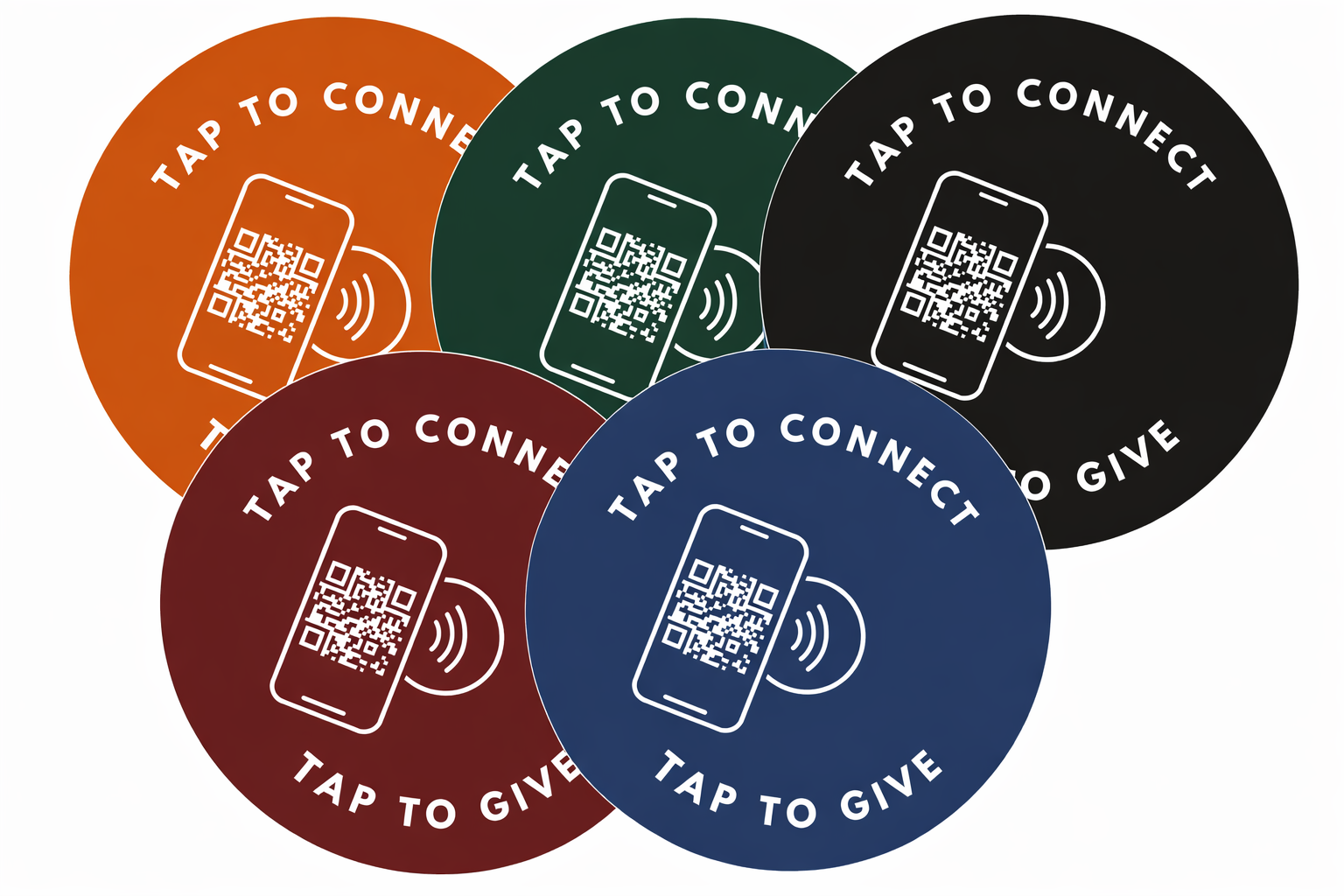
Whatever giving platform you use, close that gap. A visible giving page, a QR code in the bulletin, or a tap plate on the seat back all do the same job: they let a person give in the thirty seconds while the invitation is still fresh. Full disclosure on who is writing this. I am a pastor, and I built Tap.Giving because our own church wanted a simpler way for people to give in the moment. Tap.Giving plates are $3.50 to $5.00 each, one time, with free shipping and no monthly fees. We sell the plates. You keep the platform you already chose, and the plate just opens your existing giving page when someone taps a phone to it.
You do not need our hardware to run a good year-end. You need a plan, a warm word, and a giving step that takes seconds. If a tap plate helps you close that last gap, you can see what plates would cost for your church; if not, keep the platform you have and run the playbook above.
See your church's plate and price in 30 seconds
Design it yourself on the next page. From $3.50 per plate, free shipping, no monthly fees.
Related Articles
Year-End Giving Letter Template
A copy-and-paste letter you can adapt in ten minutes, plus when to send it.
Fall Generosity Series: A 6-Week Plan
The runway into year-end, from Labor Day to Commitment Sunday.
Why Church Giving Drops in Summer
The mirror image of year-end: a predictable swing you can plan for.