Why Church Giving Drops, and What to Do About It
Church giving usually drops for a handful of ordinary reasons, not a crisis of the heart: summer and holiday travel thin out attendance, longtime givers move into retirement, fewer people carry cash, and the online giving page is hard to find on a phone. Most of these are fixable once you know which one you are actually looking at. This is how to tell the difference and what works for each.
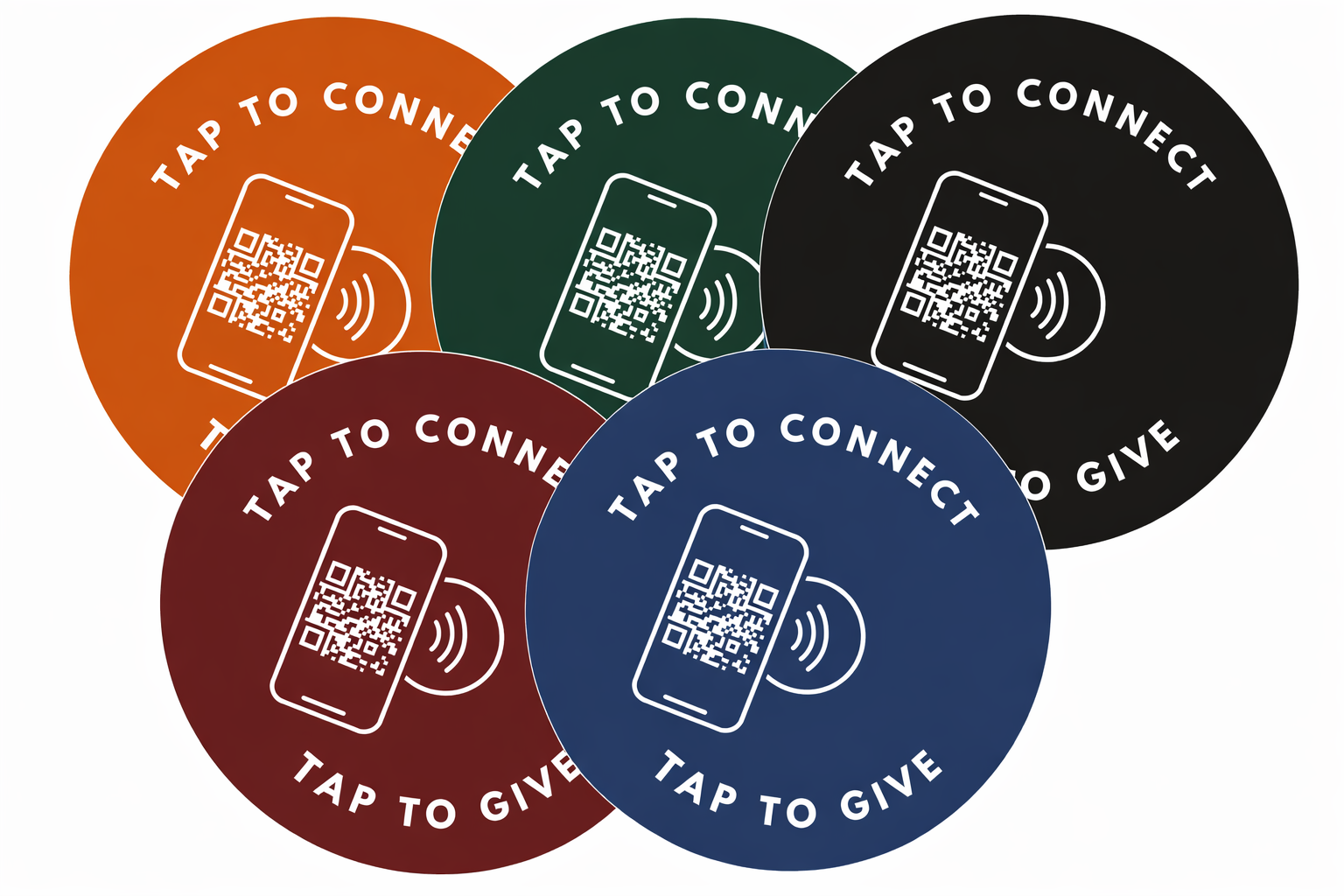
See your church's plate and price in 30 seconds
Design it yourself on the next page. From $3.50 per plate, free shipping, no monthly fees.
Is Our Giving Actually Down, or Does It Just Feel Down?
Before you diagnose a decline, make sure you have one. A weekly total can fall for a month because a chunk of your regulars were on vacation, while the people who did show up gave exactly what they always give. That is not a decline. That is a calendar.
The number that matters most is how many households gave at all this quarter, not how many dollars came in. Dollars can hold steady while your base of givers quietly shrinks, and a shrinking base is the slow problem that a good Easter or a single large gift will hide for months.
Four things to look at before you worry
- Giving per household, not just the weekly total.
- The count of households that gave at least once this quarter.
- The same season year over year: June against June, not June against a big Easter month.
- Recurring versus one-time. A healthy recurring base is your real floor.
Almost every giving report in every platform will show you these. If your platform makes them hard to find, that is worth fixing on its own, because you cannot lead what you cannot see.
Why Church Giving Drops: The Real Causes
When giving really is down, it is almost always one or two of these, not a mystery. Name the one you have before you reach for a fix.
1. Seasonality
Summer travel, school breaks, and post-Christmas fatigue pull attendance down, and giving follows attendance. This is the most common cause and the least alarming. If your dip lines up with the calendar every year, you are looking at a season, not a trend. We wrote a whole playbook on the summer version of this in beating the summer giving slump.
2. An aging donor base
The households that give the most are often your oldest, and giving naturally tapers as people move into retirement and fixed incomes. If younger families are not stepping into that gap, the total can slide even while attendance holds. This is quiet, and it is real. It is also the case for helping longtime members who have never started giving take a first step.
3. The shift off cash and checks
Federal Reserve payment research has tracked a steady, multi-year decline in how often people use cash (Diary of Consumer Payment Choice). When the plate passes and nobody has a bill in their wallet, that gift simply does not happen unless there is an easy way to give in the room without cash. This one leaks money every single Sunday, and it is the most fixable cause on the list.
4. A giving page nobody can find
If online giving is buried three taps deep on your website, or the page is slow, or it demands an account before a guest can give, most people give up. The intent was there. The path was not. Open your own giving page on your phone as if you were a first-time guest and count the taps.
5. Household budget pressure
Real financial stress in your families shows up in the plate before it shows up anywhere else. You address this one with honesty and care, not a new tool. Sometimes the pastoral answer is to teach contentment and offer help, not to push harder for the gift.
6. Silence about generosity
If money is never taught or talked about except during the fall budget push, giving drifts. People give to a mission they understand and a leader they trust with the details. A year of silence, then one anxious appeal, is the pattern that erodes giving the most.
How Do You Tell a Temporary Dip From a Real Decline?
A dip recovers within a season. A decline shows up across three or four quarters in a row. The clearest signal is whether the number of giving households is holding or falling.
| What you see | Likely a dip | Likely a decline |
|---|---|---|
| Giving households | Steady, attendance moved | Falling quarter over quarter |
| Per-household giving | Flat or up | Sliding across seasons |
| Recurring gifts | Intact | Recurring donors dropping off |
| Timing | Lines up with the calendar | Persists 3 to 4 quarters |
If per-household giving is steady and only attendance moved, watch and wait. If the count of giving households is falling season after season, act now, because that is the trend that compounds.
What Actually Works When Giving Drops
Match the fix to the cause. A digital giving option will not fix an aging base, and a stewardship sermon will not fix a giving page that takes six taps. Here is what moves each one.
Connect the vision to the need
People give to a mission they can see, not to a budget gap. Tell the story of what the money makes possible: the students discipled, the family that got groceries, the doors kept open on a hard month. Say it in specifics, a few times a quarter, not once in a panic. More on this in how to increase online giving at your church.
Make giving easy and visible in the room
Give people a way to give in ten seconds without cash, an app download, or a login. The easier the path, the fewer intended gifts you lose to friction. A giving option present in the moment of the offering recovers gifts that would otherwise wait until later and then never happen.
Thank and keep first-time givers
Retention is the cheapest growth a church has. A prompt, personal thank-you to someone who gave for the first time does more for next year's giving than any new campaign. A simple no-app digital giving setup makes it easy to see and follow up with new givers.
Teach generosity all year
Generosity is a discipleship issue before it is a budget issue. Churches that speak about money honestly and often, tied to mission rather than to shortfall, hold their giving through the seasons that shake everyone else.
Fix the giving page
Test it as a guest on a phone. If it takes more than two taps, loads slowly, or forces an account, fix that before anything else. The best sermon in the world cannot rescue a giving page people cannot use.
A 30-Minute Giving Check-Up
Block half an hour this week and run this once. It will tell you which cause you actually have.
- Pull giving households by quarter for the last two years. Is the count holding or falling?
- Compare this season to the same season last year, not to your best month.
- Open your giving page on your phone as a guest and count the taps to a completed gift.
- Ask how someone with no cash gives during the offering. If there is no clear answer, you found a leak.
- Look at your recurring givers. Are any dropping off, and do you know why?
- Write down the single biggest cause you found, and pick one fix from the section above.
Where Technology Fits, and Where It Does Not
Be honest about what a tool can and cannot do. Technology fixes exactly one cause on this list: friction. It will not reverse an aging donor base, and it will not replace teaching generosity from the front. But the cash-to-digital gap is real, it leaks gifts every Sunday, and it is the one leak you can close this month.
The simplest fix is an in-service way to give that needs no cash, no app, and no login. A tap-to-give plate on the pew or chair back opens your existing giving page the moment someone holds a phone to it, so the gift happens in the room instead of waiting until later.
I am a pastor. I built Tap.Giving because our own church needed a way to give that did not add another monthly bill.
Tap.Giving plates are $3.50 to $5.00 each, one time, with free shipping and no monthly fees. We sell the plates. You keep the platform you already chose, whether that is Tithely, Pushpay, Subsplash, Donorbox, or anything else with a mobile giving page.
See pricing or design your plate to see what it would look like for your church.
Fix the friction with a tool, and address the other causes on their own terms. Do both, and most giving declines turn around inside a giving year.
FAQ
Is declining giving just about the economy?
Rarely just the economy. Household budget pressure is real and it shows up in the plate, but most giving declines are a mix of ordinary causes: attendance seasonality, an aging donor base, fewer people carrying cash, and a giving page that is hard to find. The economy is the one cause you cannot fix from the church office. The others you can. Name which ones you actually have before you decide the problem is out of your hands.
Should we talk about money more from the platform?
Yes, but year-round and vision first, not once a year at budget time. People give to a mission they can see, so tie giving to what it makes possible. A short, honest word about generosity a few times a quarter does more than one anxious appeal in the fall. Teaching generosity is a discipleship issue long before it is a budget issue.
Does adding a digital giving option actually recover lost giving?
It closes one specific leak: the gift that would have gone in the plate if the person had cash. Fewer people carry cash every year, so an easy in-service option that needs no cash, no app, and no login recovers gifts that were simply never made. It will not fix an aging donor base or a year of silence about generosity. Treat technology as the fix for friction, and address the other causes on their own terms.
Related Articles
Beat the Summer Church Giving Slump
The seasonal version of this problem: why summer giving falls and a practical plan to hold it steady.
GuideHow to Increase Online Giving at Your Church
Vision-first, friction-last: what moves online giving up when you are ready to grow it, not just defend it.
PlaybookReaching Longtime Members Who Have Never Started Giving
The quiet gap behind many declines: faithful members who have simply never taken the first giving step.