GivingTuesday for Churches: A Simple 2026 Plan
GivingTuesday 2026 lands on Tuesday, December 1. For a church it works best as one clear ask tied to one specific project, sent through the channels your people already read, with a giving link that opens in a single tap. The plan below counts backward from December 1 so nothing gets rushed in the last week.
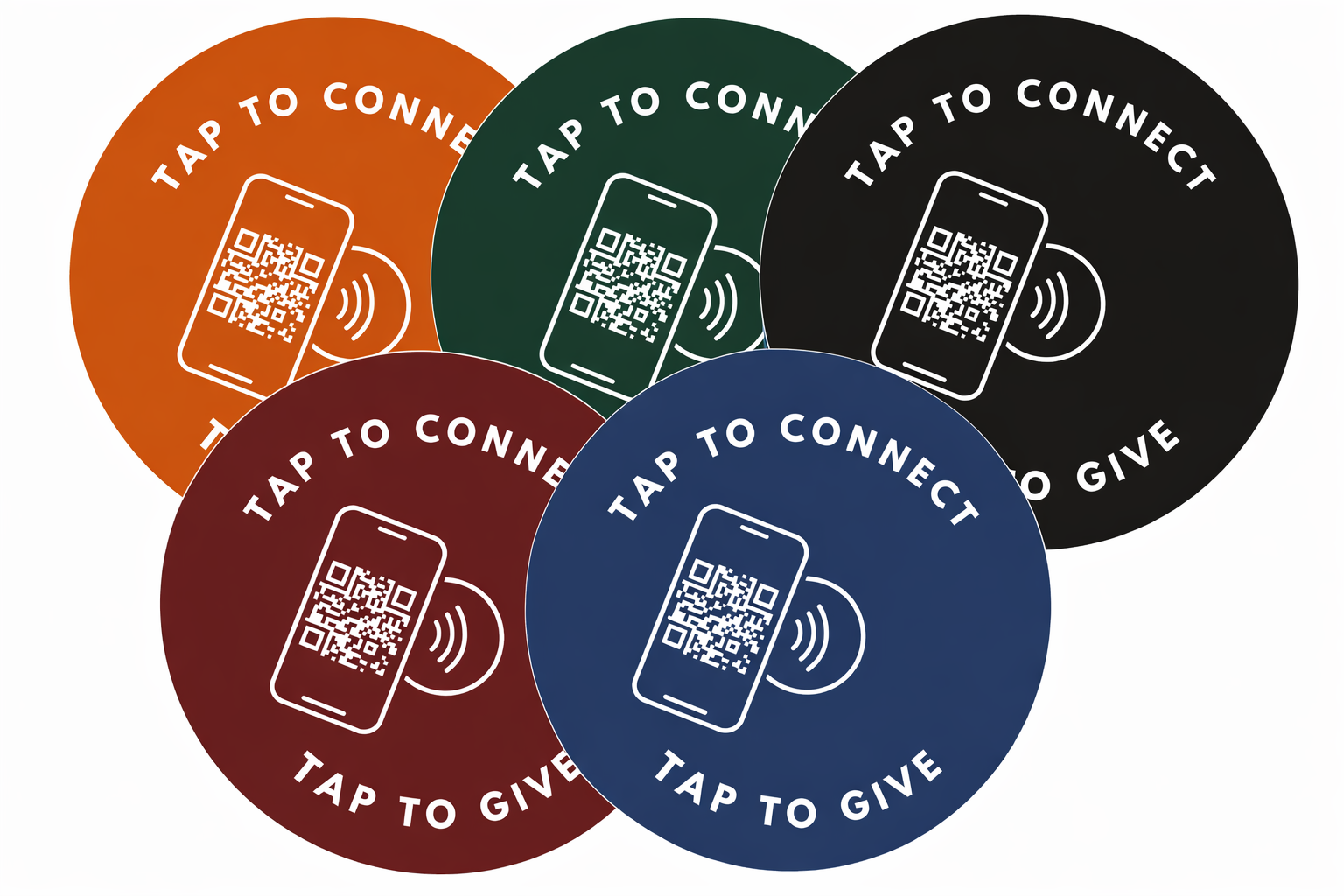
See your church's plate and price in 30 seconds
Design it yourself on the next page. From $3.50 per plate, free shipping, no monthly fees.
What GivingTuesday Is, and Why It Fits a Church
GivingTuesday is a single day of generosity held the Tuesday after Thanksgiving; in 2026 that is December 1. It started in 2012 at the 92nd Street Y in New York and has grown into a global day when people are already primed to give, you can read more at givingtuesday.org.
The day is usually framed for nonprofits, so a lot of pastors scroll past it. That is a missed Tuesday. Your church is a nonprofit, your people are already in a generous frame of mind the week after Thanksgiving, and December 1 sits at the front door of your year-end season. You do not have to invent a reason to give. You only have to give people one clear thing to give toward.
Think of GivingTuesday as the kickoff of the December push, not a side project. The gift someone makes on December 1 is the easiest on-ramp to the broader year-end giving season that funds your budget and lands before the tax-year deadline.
Set One Goal and One Project
The single biggest mistake churches make on GivingTuesday is asking for the budget. "Help us meet our general fund" is true, but nobody can picture it. People give to a need they can see, not a line item.
Pick one project your congregation can picture in a sentence. A few that work well for a church:
- A specific benevolence fund: rent and utility help for families in your city this winter.
- One ministry's year: fund the youth mission trip or the food pantry for a full year.
- One fixable thing: the new sound board, the nursery remodel, the van that keeps breaking down.
Then set a number you would be genuinely glad to hit, not a number that would impress another church. A goal you can show on a thermometer and announce as "we did it" on Sunday is worth more than a stretch goal you quietly miss. One project, one number, one deadline.
The Four-Week Timeline (Counting Back From December 1)
GivingTuesday 2026 is unusually late because Thanksgiving falls on November 26, which gives you a clean four weeks of November to prepare. Here is the whole plan, counted backward so the last week is calm instead of frantic.
Week of November 9: Decide
Lock the project, the goal number, and whether you will offer a match. If you want a match, ask one family or a small group to pledge it now, while there is time to say yes. Write the one-sentence version of the ask you will repeat everywhere.
Week of November 16: Build
Set up or label a giving fund for the project so gifts are easy to track. Draft the emails, the text message, the two or three social posts, and the Sunday slides. Test your giving link on a phone and fix anything slow or confusing before anyone sees it.
Week of November 23: Warm up
Tell the story on Sunday, November 29, two days out. Share who the project helps and why it matters, and name the date. Thanksgiving week is the warmest giving mood of the year; do not waste it by staying quiet until the day itself.
Tuesday, December 1: Ask
Send the morning email, the midday text, and an evening update showing progress toward the goal. Post the thermometer. Keep it to one clear ask repeated at the times people actually check their phones, not a stream of noise.
That is the entire campaign. Four short weeks, one project, and a day that mostly runs itself because you prepared.
What to Actually Say, Channel by Channel
Use the channels your people already read, and say the same thing in each one's native voice. Short beats polished. Here is a starting draft for each.
Email (December 1 morning)
"Today is GivingTuesday. We are raising $8,000 to keep the food pantry stocked through winter. Every gift helps a neighbor eat this week. Give in one tap: [link]. Thank you for being generous."
Text (midday)
"GivingTuesday update: we are at $4,300 of $8,000 for the pantry. Would you help us finish? [link]"
From the stage (Sunday before)
"This Tuesday is GivingTuesday. We are asking the whole church to help fund the pantry for the winter. I will show you exactly how to give in about ten seconds right now."
Notice what every version has in common: the project, the number, and a link. No guilt, no fine print, no three-paragraph windup. If you want help writing the giving ask so it does not feel awkward, we wrote a whole guide on increasing online giving without pressure.
Make the Gift a Single Tap
On a one-day push, friction is the enemy. Every extra step between hearing the ask and finishing the gift costs you gifts you would otherwise have received. The goal is simple: the moment someone decides to give, they should be able to finish in seconds, from wherever they are.
Two things make that happen. First, use the giving page you already have and make sure the link is one tap from your email, your text, and your slides, no app to download, no account to create. Second, give people a way to give in the room on Sunday, because the warmest moment is right after you tell the story, and a lot of people never get back to the email.
That second part is where a tap plate earns its place. A member taps a small plate on the seat back in front of them, their phone opens your existing giving page, and they give before the moment passes. Tap.Giving plates are $3.50 to $5.00 each, one-time, with free shipping and no monthly fees. We sell the plates; your church keeps the giving platform it already chose, whether that is Tithely, Pushpay, Subsplash, Givelify, or anything else.
I pastor, and I built Tap.Giving because our own church wanted the offering to be as easy as tapping a card at a coffee shop without adding another monthly bill. If plates would help your December, you can design yours and see the price in about thirty seconds, or read the full pricing. New orders get 10% off for 7 days from the quote. Either way, the point stands: on GivingTuesday, the church that removes the most steps collects the most of its goal.
After December 1: Thank, Report, and Keep Them
The day is not over when the clock hits midnight. What you do in the next week decides whether a GivingTuesday giver becomes a year-round giver or a one-time one.
- Thank people fast and specifically. A same-week note that names the result ("we hit $8,400, the pantry is covered") is worth more than a polished letter in January.
- Report the outcome from the stage. Tell the whole church what their gifts did. People give again when they see the last gift mattered.
- Invite first-time givers to stay. Many December-1 givers have never given online before. A short, warm follow-up is how you keep them.
We have a ready-to-use sequence for that last step in our new-giver thank-you email guide, and more on the longer game in building a culture of generosity. GivingTuesday is the spark; the follow-up is what keeps it lit.
FAQ
Is GivingTuesday worth it for a small church?
Yes, if you keep it small. A church of 80 does not need a national campaign. Pick one project your people can picture, set a goal you would be glad to hit, and ask three times through the channels they already read. A clear, modest ask from a church they love beats a slick campaign from a church they do not.
How is GivingTuesday different from year-end giving?
GivingTuesday is one day, December 1 in 2026, tied to a single project with a single goal. Year-end giving is the longer December push toward your annual budget and the tax-year deadline. Treat GivingTuesday as the launch of your year-end season, not a competitor to it. The project you fund on December 1 can be the on-ramp to the broader December ask.
Should our church offer a matching gift on GivingTuesday?
A match helps if it is real and named. Ask one family or a small group to pledge a matching amount ahead of time, then tell the congregation that every gift up to that number is doubled until it runs out. A match you can point to by its real dollar figure gives people a reason to give today instead of later. Do not invent a match you cannot cover.
How do we make giving fast enough for one day?
Remove every step between the ask and the gift. Use the giving page you already have, make the link one tap from your email, text, and slides, and have a way to give in the room on Sunday. The fewer taps between hearing the ask and finishing the gift, the more of your goal you reach before the day ends.
Related Articles
The Church Year-End Giving Guide
Plan the whole December push: the ask, the timeline, and the deadline that drives year-end gifts.
PlaybookHow to Increase Online Giving at Your Church
Make the ask without the awkwardness, and remove the friction that costs you gifts.
TemplateThe New-Giver Thank-You Email Sequence
Turn a one-time GivingTuesday giver into a year-round one with a short, warm follow-up.