New-Giver Thank-You Email Sequence: 3 Church Templates
A new-giver thank-you email sequence for churches is three short notes sent over the first 10 days: a same-day thank-you, a day-3 note that names one real result, and a day-10 invitation to give again. Because only about 1 in 5 first-time donors ever gives a second time, this window decides retention. Tap.Giving plates let that second gift happen in about 8 seconds at the seat.
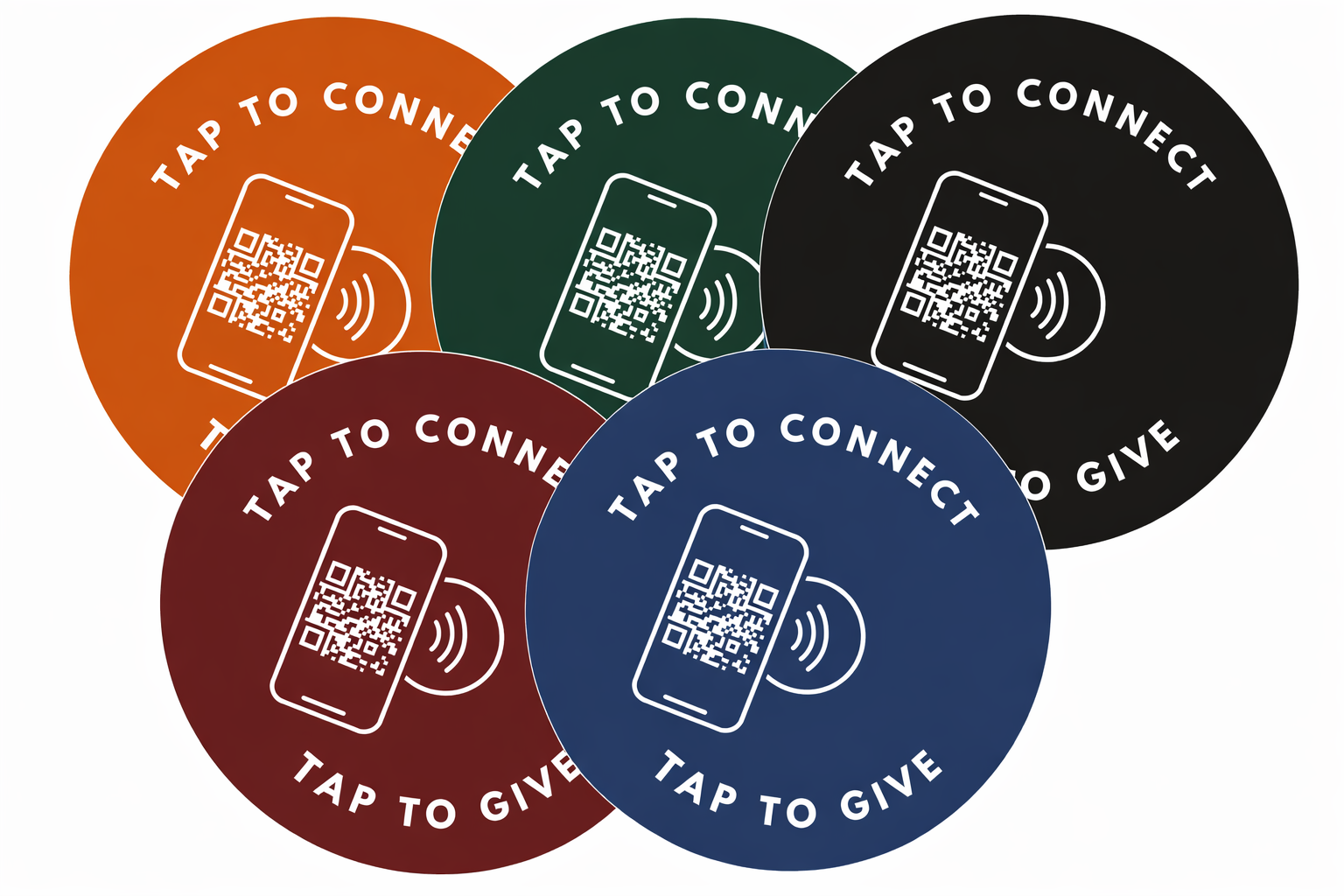
A visitor can give without installing anything. A thank-you sequence is how you keep them past that first gift.
Key facts
- Send three emails in the first 10 days: same-day, day 3, and day 10.
- Only about 1 in 5 first-time donors gives again, so follow-up is where retention is won.
- Keep each email under 150 words: thank, report one result, then invite.
- About visitors can give with no app to install, and NFC is fewer steps than a QR code.
- Tap.Giving plates cost $3.50-$5.00 each, one-time, and open a tap to give in about 8 seconds.
See your church's plate and price in 30 seconds
Design it yourself on the next page. From $3.50 per plate, free shipping, no monthly fees.
Why do the first 10 days after a first gift matter so much?
Because across the nonprofit world, only about 1 in 5 first-time donors ever gives a second time, a pattern long tracked in nonprofit fundraising research. A first gift is not a relationship yet. It is a person taking one step toward your church and quietly waiting to see whether anyone noticed.
Picture a guest who visited two Sundays ago. They pulled out their phone during the offering, gave $40, and drove home. If the next thing they hear from you is a January tax statement, you have told them the gift was a transaction. A short, warm thank-you sequence in the first 10 days tells them it was the start of something.
This is not a fundraising trick. It is basic hospitality, moved to email. The same instinct that makes you greet a first-time visitor at the door should make you follow up on a first-time gift. The sequence below is what that greeting sounds like in writing, and it pairs naturally with how you already welcome first-time visitors who give through NFC giving.
When should each thank-you email go out?
Send three emails inside the first two weeks, spaced so each one has a distinct job. Automate the timing so none slip through, then personalize the words. Here is the cadence you can drop straight into your giving platform or email tool.
| When | One job | |
|---|---|---|
| Within 24 hours | 1. Thank you | Confirm the gift landed and say thank you, fast, while the moment is warm. |
| Day 3 | 2. Here is what it does | Name one specific, true result the gift helps make possible. |
| Day 10 | 3. Make it a rhythm | Invite the giver into recurring giving with one clear, easy next step. |
Three emails is the sweet spot. One feels like a receipt; five feels like a campaign. If you already run a stage announcement for digital giving for churches, this sequence is the private, one-to-one version of that same welcome, and our stage-announcement script keeps the two consistent.
The 3-email thank-you sequence you can copy today
Copy each template, swap the bracketed pieces for your real details, and load them into your email tool as a triggered sequence. Every one is deliberately short. A first-time giver reads on a phone, in a hurry, and rewards you for getting to the point.
Email 1: within 24 hours
Subject: Thank you, [First Name]
Hi [First Name],
Your gift to [Church Name] came through, and I wanted to say thank you personally. Whether this was your first time giving or your fiftieth, it matters, and we noticed.
You do not need to do anything else. Your receipt is on its way from our giving system for your records.
If you are new around here, just reply to this email. I would love to know your name and say hello on Sunday.
Grateful for you,
[Pastor Name]
[Church Name]
Email 2: day 3
Subject: Here is what your gift is doing
Hi [First Name],
I promised your gift would matter, so here is one thing it helps make possible: [one specific, true result. Example: "40 kids will eat breakfast this week through our Tuesday pantry," or "a family two blocks away kept their lights on this month."]
That is the kind of thing your generosity does at [Church Name]. You are part of it now.
If you ever want to see where the giving goes, reply and ask. We keep no secrets about it.
Thankful,
[Pastor Name]
Email 3: day 10
Subject: An easy way to keep it going
Hi [First Name],
A lot of people tell me they want to give regularly but forget in the rush of the week. If that is you, here are two ways to make it automatic:
- Set up recurring giving online: [your giving URL]
- On Sunday, just tap your phone on any Tap to Give plate at your seat. It takes about 8 seconds, no app needed.
No pressure at all. However you give, we are glad you are here.
Grateful for you,
[Pastor Name]
[Church Name]
That "just tap your phone on any plate" line only works if the plates are actually at the seats and members know what they are. That is the piece most follow-up plans skip. If NFC tap plates are new to you, here is how tap to give works in plain English.
Give that day-10 email an easy place to land.
See pricing →What turns a thank-you into a recurring giver?
Specificity and speed. A generic "thank you for your donation" reads like a bank alert; a note that names the giver, a real result, and a pastor turns a transaction into a relationship. Thank before you ask, and ask for only one thing.
Use their name
"Hi Sarah" beats "Dear Friend" every time. People give to a family, not a mailing list. Merge the first name from your giving platform.
Move fast
The same-day email carries most of the weight. Gratitude that arrives a week late reads like an afterthought, not a welcome.
One ask, one link
Only the day-10 email asks for anything, and it asks for exactly one thing: make giving a rhythm, one tap or one click.
Notice what is missing: no guilt, no budget-shortfall panic, no fine print. The giving statement handles the legal side later. If a new giver never gives again, it is rarely because they stopped caring; more often the path back was just a little too much work. That is the same friction that quietly drains a giving page, which we break down in the reasons a giving page loses donations.
How tap to give makes the sequence land
Your day-10 email creates intent. The moment between "I will give again" and actually doing it is where second gifts leak away. If a member has to find a checkbook, hunt for a giving URL, or download an app, a good share of them never finish. Contactless giving removes that gap: it shrinks the distance between the decision and the gift to almost nothing.
NFC tap plates close that gap on Sunday morning, which is exactly when your welcome sequence is freshest. A member reads the day-10 note on Saturday, sits down Sunday, sees the plate on the seat in front of them, holds up their phone, and completes a tap to donate in about 8 seconds. Tap and give, and it is done, no login, no typing.
A quick example
A 200-seat church orders 200 NFC tap plates at $4.00 each: $800 one-time, free shipping, no monthly fees. They mount them, demo one tap from stage, and point every day-10 email at "the plate on your seat." Even a handful of new recurring givers covers the plates in a single month, and the plates keep working every Sunday after that. For the numbers behind that math, see our NFC giving ROI breakdown.
The plates work with whatever platform you already run, so nothing about your receipts or reporting changes. For the Sunday side of new-giver momentum, our in-service giving playbook and our usher and greeter training guide go deeper. When you are ready for hardware, start your order and we will have plates to you inside the 2-3 week window.
Your new-giver follow-up checklist
Set this up once and every first-time giver gets the same warm welcome automatically. Check each line before you turn the sequence on.
- A first gift triggers email 1 automatically within 24 hours.
- Each email uses the giver's first name, merged from your giving platform.
- Email 2 names one specific, true ministry result.
- Email 3 makes exactly one ask: set up recurring giving or tap and give at the seat.
- Every email is signed by a real pastor, and replies go to a real inbox.
- Your giving page loads fast on mobile and lets guests give without an account.
- NFC tap plates are mounted and demoed from stage so the day-10 ask is real.
- The annual giving statement is kept separate and sent by January 31.
Get these eight lines right and your thank-you sequence stops being a nicety and starts being the quiet engine of donor retention at your church.
Give your day-10 email a one-tap finish
One-time hardware cost. No monthly fees. NFC tap plates work with the giving platform you already use, and most churches are tapping within the typical delivery 2-3 weeks from artwork approval window.
Start a quote to get 10% off for 7 days
FAQ: new-giver thank-you emails
What should we email a first-time church giver?
Send a short three-email sequence over the first 10 days: a same-day thank-you that confirms the gift landed, a day-3 note that names one specific result the gift makes possible, and a day-10 invitation to make giving a rhythm. Keep each email under 150 words, thank before you ask, and give one clear next step. Roughly 1 in 5 first-time donors ever gives again, so the follow-up is where retention is won or lost.
When should each thank-you email go out?
Email 1 within 24 hours of the first gift, while the moment is fresh. Email 2 on about day 3, when you can point to a concrete result. Email 3 on about day 10, inviting the giver into recurring giving. Sending inside the first two weeks is what separates a retained giver from a one-time gift.
How is a thank-you email different from a giving statement?
The thank-you sequence is a warm, relational welcome sent in the first days after a gift. The giving statement is the official tax receipt, sent by January 31. For any single gift of $250 or more, the IRS requires a written acknowledgment that states whether the donor received goods or services in return, and most churches handle that with the annual statement, not the thank-you email.
How do NFC tap plates help with new-giver retention?
The day-10 email asks the giver to give again, and the easiest place to do that is Sunday morning at their seat. NFC tap plates let a member give in about 8 seconds by holding a phone to the plate, no app required.
Can we run this sequence with Tithely, Pushpay, or Planning Center?
Yes. Tap.Giving plates are hardware, not a payment processor, so they open the giving page you already run on Tithely, Pushpay, Subsplash, Donorbox, Givelify, Anedot, or Planning Center Giving. Your platform still sends receipts and reports; the thank-you sequence and the plates simply sit on top of the giving flow you already have.
Should the thank-you emails be automated or personal?
Automate the timing, personalize the content. Trigger the three emails from your giving platform or email tool so none get missed, but use the giver's first name, a real ministry result, and a pastor's name in the signature. An automated note that reads like a receipt gets ignored; a warm note that happens to be automated gets a second gift.
How much do NFC giving plates cost?
Plates are a one-time purchase: $5.00 each for 100-199, $4.00 each for 200-399, and $3.50 each for 400 or more, with free shipping and no monthly or transaction fees from us. A 200-seat church spends $800 once. See the pricing page for full quantity breaks, and Start a quote to get 10% off for 7 days.
Related Articles
Announce Digital Giving From Stage: Word-for-Word Script
The 60-second announcement that turns a plate on the seat into first-time givers, with a live demo built in.
PlaybookYear-End Giving Letter Template for Churches
A copy-paste letter, a November-to-December send calendar, and the tap to give setup that turns it into gifts.
GuideHow Tap to Give Works for Churches
A plain-English walkthrough of what happens when a member taps a plate, what it costs, and how it fits your platform.