Recurring Giving for Churches: How to Grow It
Recurring giving is a gift a member schedules to repeat on its own, usually monthly, through the giving platform your church already uses. It is the steadiest money a church has, because it keeps arriving in the weeks when attendance dips and the plate is thin. The single best move to grow it is to invite it plainly and make it the default, not the afterthought. Here is how.
What is recurring giving, and why does it matter so much?
Recurring giving is a gift a member schedules once and then lets run on its own, usually a set amount every month. It is the church version of the autopay most of your people already use for a mortgage, a utility bill, or a streaming service. They decide once, and the decision keeps itself.
That small difference changes everything about your budget. A giver who writes a check when they remember gives in bursts, and the bursts stop when they travel, when life gets loud, or when they simply forget. A giver on a monthly plan gives twelve times a year without thinking about it, including the Sundays they are not in the room.
Donor-retention research has found for years that automatic, scheduled givers stay giving far longer than one-time givers, which is why nonprofits of every kind now push the monthly option hard. You can see the long trend toward sustained online giving in the Blackbaud Institute Charitable Giving Report. The lesson for a church is simple: the people who set up recurring gifts are the people who are still with you two years from now.
What does recurring giving do to a church budget?
It turns a hopeful number into a floor you can count on. Walk the math for your own church and the point makes itself.
Say you have 120 regularly giving households. Imagine 30 of them set up a recurring gift averaging $150 a month. That is $4,500 every month, or $54,000 a year, that lands whether or not those families are in the service, whether or not it rains, whether or not it is the first Sunday in July. Before a single plate passes, a quarter of your giving base has already funded a known slice of the budget.
Now picture the same 30 households giving only when they remember. Over a summer, a stretch of travel, or a busy season, their giving sags, and the shortfall is exactly the money you had already spent on staff and ministry. The size of your recurring base is the size of the cushion under your worst months. If you have ever watched giving crater in July, you already know the problem; we wrote about the pattern in why church giving drops in summer, and recurring giving is the most durable answer to it.
This is also the quiet reason some churches ride out a down season and others scramble. It is rarely that the generous church has more generous people. It usually has more of its people on a plan.
How do you actually grow recurring giving?
You grow it by inviting it on purpose, making it the easy path, and celebrating it out loud. Most churches never ask directly, so most givers never think to switch. Here is the order that works.
- Ask for it by name. From the stage, in plain words, invite people to set up a monthly gift, not just "to give." A one-time gift is a moment; a recurring gift is a habit, and people only form the habit when a pastor names it as the normal next step.
- Make it the default, not a buried option. On your giving page, the recurring choice should be visible and pre-selected or front and center, so a member has to opt out of monthly rather than hunt for it.
- Tie it to a story, not a shortfall. "When you give monthly, our food pantry can plan a full year instead of hoping week to week." People give steadily to a vision they can picture.
- Make switching a thirty-second job. Show the exact steps once, from the front, on a phone. The easier the switch, the more people make it in the moment instead of "later."
- Thank recurring givers specifically. A short, personal note when someone starts a monthly gift tells them it mattered and that a real person noticed. Gratitude is what keeps the plan running.
Year-end is the best on-ramp of the whole calendar. The giver who makes a generous December gift is the easiest person in the church to invite onto a monthly plan in January, while the decision is fresh. Our church year-end giving guide lays out that hand-off week by week.
What stops people from setting up a recurring gift?
Usually it is not conviction, it is friction and fear of losing control. Name both out loud and most of the hesitation goes away.
The first barrier is the setup itself. If giving means finding your website, hunting for a link, and typing a card number on a slow phone in a crowded room, people decide to do it later, and later rarely comes. Shorten that path and more people finish.
The second barrier is control. Givers worry a recurring gift is hard to change or that they will forget it is running. Say the opposite plainly: they set the amount, they can pause or change it any time in under a minute, and you will send a giving statement so nothing is a mystery. People commit to what they can clearly undo.
The third barrier is that nobody asked. That one is free to fix. For more on lowering the ask without turning Sunday into a telethon, see how to increase online giving at your church and why church giving drops and what to do about it.
Where does giving technology fit in?
You almost certainly already own the tool you need. Nearly every giving platform a church uses, including Tithely, Pushpay, Givelify, and Donorbox, has recurring giving built in. The job is not buying software. It is turning the option on, making it the default, and closing the gap between the invitation and the gift.
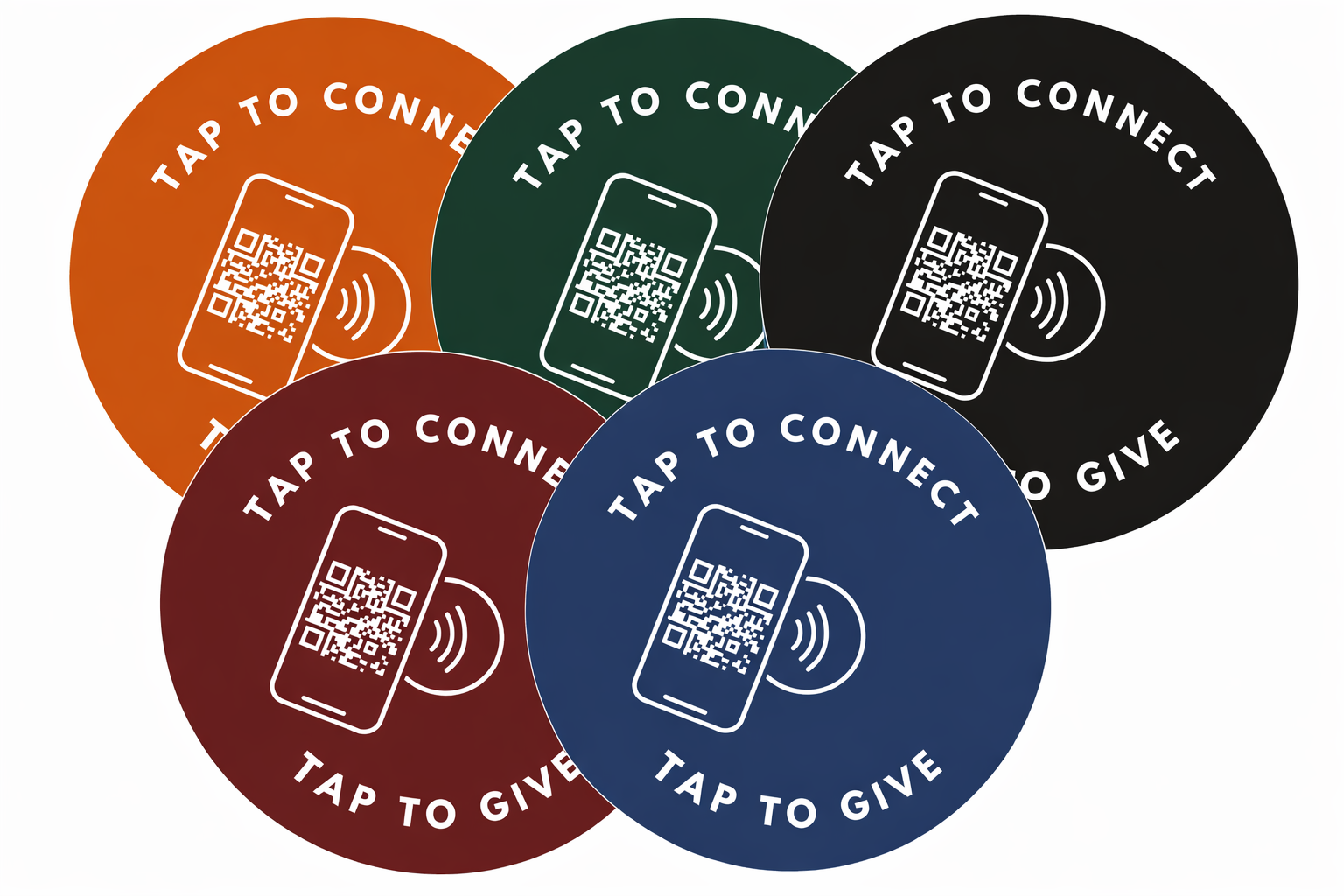
That last gap is where most recurring gifts are won or lost. When you invite someone to set up a monthly gift during a service, the few seconds between your words and their phone are decisive. A visible giving page, a QR code in the bulletin, or a tap plate on the seat back all do the same job: they let a person start the gift while the invitation is still in the air.
Full disclosure on who is writing this. I am a pastor, and I built Tap.Giving because our own church wanted a simpler way for people to give in the moment. Tap.Giving plates are $3.50 to $5.00 each, one time, with free shipping and no monthly fees. We sell the plates. You keep the platform you already chose, and the plate just opens your existing giving page, including its recurring option, when someone taps a phone to it.
You do not need our hardware to grow recurring giving. You need to ask for it, make it the default, and remove the friction. If a tap plate helps you close that last gap, you can see what plates would cost for your church. If not, keep the platform you have and run the plan above. The move that matters is the invitation.
See your church's plate and price in 30 seconds
Design it yourself on the next page. From $3.50 per plate, free shipping, no monthly fees.