Announce Digital Giving From Stage: A Word-for-Word Script
To announce digital giving from stage, keep it under 60 seconds: name the plate, show one live tap, and tell people exactly what happens. A Tap.Giving plate opens your existing giving page in about 8 seconds, with no app required.
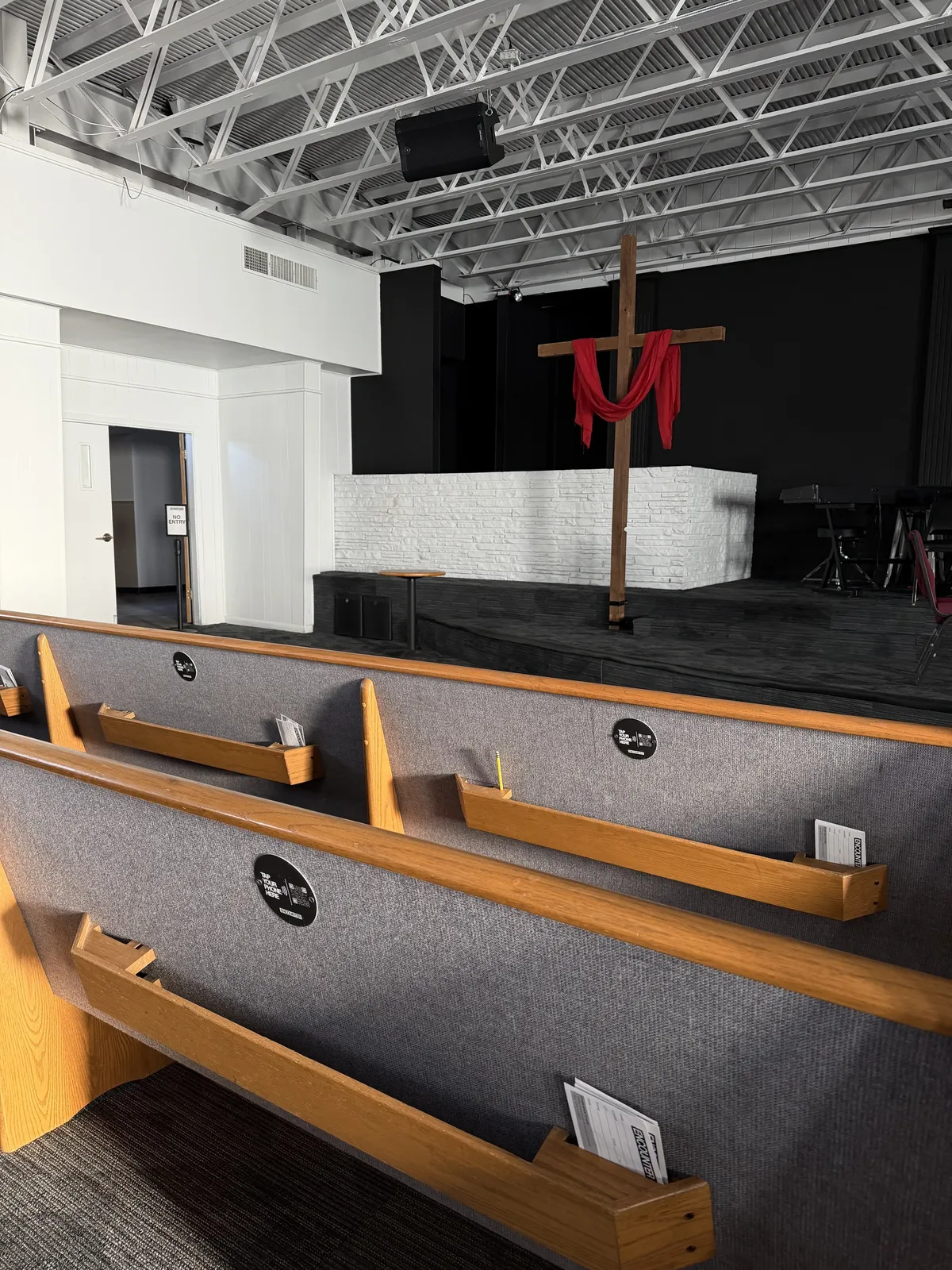
Demonstrating tap to give from stage gets the response while the moment is live, instead of as homework for later.
Key facts
- A strong tap-to-give announcement runs under 60 seconds, including a live demo.
- Demonstrating from stage helps churches reach higher in-service participation.
- A single tap opens your giving page in about 8 seconds, with no app to download.
- Repeat the announcement three Sundays in a row, then keep a one-line mention.
- Tap.Giving plates cost $3.50-$5.00 each, one-time, and work with Tithely, Pushpay, Subsplash, Donorbox, Givelify, and Anedot.
See your church's plate and price in 30 seconds
Design it yourself on the next page. From $3.50 per plate, free shipping, no monthly fees.
Why the Announcement Matters More Than the Technology
The plates on the pew backs do nothing if nobody knows they are there. You can spend a Saturday mounting 200 plates and still watch the offering go by untouched, because people will not use a thing they do not understand. The announcement, not the hardware, is what turns a mounted plate into a gift.
Think about the last time you tried a new self-checkout or tapped your card at a store that had just switched systems. You hesitated for a second, looked for a cue, then copied the person ahead of you. Your congregation does the same thing. When one person sees another tap and give, the hesitation is gone.
Digital giving for churches now makes up a large share of what congregations receive where it is offered, and the same NFC standard that powers Apple Pay and Google Pay is already in nearly every pocket in your building. As far as church giving technology goes, the hard part is solved. The adoption gap is a communication problem, and 60 seconds of clear, confident words from the front closes most of it.
The 60-Second Script You Can Read This Sunday
Here is a word-for-word script you can read as written or make your own. It follows the only structure that works: what it is, why it exists, what to do. Hold your own phone while you say it.
"Before we receive today's offering, I want to show you something new on the seat back in front of you. That little plate with our logo is a tap-to-give plate."
"Here is all it does. I hold my phone near it, like this. and our church's giving page opens right up. No app to download. No account to create. I pick an amount, confirm with my thumb, and I am done. About eight seconds."
"If you already give online, this is just a faster front door to the same page. If you have been meaning to start, this is the easiest way in. And if you would rather give with cash or a check, the plate is still passing. Nothing changes there."
"So as the plate comes around, feel free to give however is easiest for you. Let's worship God with our generosity together."
Notice what the script does not do. It does not apologize. It does not explain what NFC giving is under the hood. It does not make anyone feel behind for using cash. It names the plate, shows one tap, and gives permission. That is the whole job.
If you want more variations for different moments, our post on what to say when introducing NFC giving gives you shorter lines for the weeks after launch, and the launch kit that ships with every order includes slides and a printable version of this script.
How Do You Demo Tap to Give From the Stage?
The demo is the part most churches skip, and it is the part that works. A live tap you can see beats any amount of explanation. Here is how to run it so the whole room can follow along.
- Have a plate in hand or on a stand. Do not point vaguely at the seats. Hold up an actual plate, or clip one to a music stand where the cameras and the back row can see it.
- Tap your own phone and narrate it. "Watch, I am holding it near the plate now. there it is." If you have screens, mirror your phone so the giving page appears on the wall the moment it opens.
- Complete one real gift, or show the amount screen. You do not have to give live, but showing the amount buttons removes the last bit of mystery about what happens after the tap.
- Name the fallback. "If your phone is older, there is a QR code on the plate too, and cash and check still work." Nobody feels excluded, so nobody tunes out.
A 30-second demo on one Sunday does more for adoption than a month of bulletin announcements. If you want the deeper mechanics before you present, how tap to give works for churches walks through the eight-second giver experience step by step, and our how-it-works page has a short video you can even play from the stage.
Need plates before your next launch Sunday?
See pricing →The Three Mistakes That Kill Adoption
Almost every stalled launch traces back to one of these three habits. Each one leaves givers guessing, and a guessing giver does nothing.
1. Apologizing for it
"I know this is a little new-fangled, bear with me" tells the room the tool is a burden. Frame contactless giving as a convenience you are glad to offer, the same way you would introduce online sign-ups or a new parking lot. Confidence from the front gives people permission to try.
2. Telling instead of showing
Describing tap to give in words and never demonstrating it is the single most common miss. People cannot picture what they have never seen. One live tap replaces three paragraphs of explanation, so always show, never just tell.
3. Announcing it once and moving on
Adoption is a habit, not an event. A single announcement reaches the people who happened to be present and paying attention that one morning. Repetition over a few weeks is what turns a novelty into a normal part of the offering. More on the rhythm below.
If giving has felt flat even after you announced the plates, it is worth auditing the whole path. Our guide to increasing digital donations without an app covers the giving-page fixes that make sure a tap actually converts once someone follows through.
How Often Should You Repeat the Announcement?
Announce it from stage three Sundays in a row, then settle into a light rhythm after that. Here is a simple four-week cadence you can copy into your service planning.
| Week | From Stage | Goal |
|---|---|---|
| Week 1 | Full script + live demo | Everyone learns the plate exists and sees it work |
| Week 2 | Short script + quick demo | Reinforce for anyone who missed week one |
| Week 3 | One-line reminder during the offering | Make tapping feel routine, not novel |
| Week 4+ | Occasional mention, especially for guests | Keep new and returning visitors in the loop |
Most churches watch participation build across that first month as members see others tap and give. Our list of eight NFC giving wins to celebrate in your first month shows the early signs worth watching for. For more ways to lift the in-service moment itself, see our playbook on increasing in-service giving and how NFC tap plates support church growth over a full season. And if giving has already softened, start with why church giving drops and what to do about it.
How the Right Plate Makes the Announcement Land
A great script still needs something in the seat back for people to tap. This is where the plate itself does quiet work: it should be obvious, branded, and pointed at the giving page you already use, so the words you say from stage match exactly what the giver sees in their hand.
Tap.Giving plates carry your church logo and the words Tap to Give, so a first-timer who missed the announcement still understands the plate at a glance. Each plate is programmed with your existing giving URL, which means tap to donate works with Tithely, Pushpay, Subsplash, Donorbox, Givelify, and Anedot without changing anything about how your church handles money. We sell the hardware; your platform keeps doing the rest.
The cost is a one-time purchase, not a subscription. Plates run $5.00 each for 100-199, $4.00 each for 200-399, and $3.50 each for 400 or more, with free shipping and no monthly fees. A 200-seat church ordering 200 plates pays $800 once. That is the whole spend, and The first-order discount is 10% for 7 days from the quote. See the full breakdown on our pricing page.
Order in the next few weeks and you will have plates in hand for your launch Sunday: delivery typically runs 2-3 weeks from artwork approval with free shipping. When you are ready, start your order and tell us your platform, and we will make sure every plate opens the right giving page before it ships.
Ready to launch tap to give at your church?
One-time hardware cost. No monthly fees. Works with the giving platform you already use. Most churches are tapping within 2-3 weeks of ordering.
Start a quote to get 10% off for 7 days
FAQ: Announcing Digital Giving From Stage
How do I announce digital giving from stage without making it weird?
Keep it under 60 seconds and treat it as a normal part of the offering, not an apology. Name the plate, hold up your phone, show one live tap, and say exactly what happens next. When you demonstrate tap to give instead of only mentioning it, people stop guessing and start participating. The awkwardness comes from vagueness, so be concrete: one plate, one tap, one giving page.
What should a pastor say when introducing tap to give?
Say what it is, why it exists, and what to do, in that order. A working line is: "On the seat back in front of you is a Tap.Giving plate. Hold your phone near it, our giving page opens, and you can give in about 8 seconds. No app, no account." Then demo one tap so the room sees it work. Repeat the same wording for three Sundays so it becomes familiar.
How long should the digital giving announcement take?
Under 60 seconds, including the demo. Anything longer feels like a sales pitch and pulls focus from worship. The goal is not to explain NFC giving in detail; it is to remove hesitation so first-time givers know a plate exists, know it is safe, and know the tap completes in about 8 seconds. Save the technical explanation for a card in the seat back or your website.
How often should we repeat the tap-to-give announcement?
Announce it from stage three Sundays in a row, then drop to a one-line mention during the offering after that. Adoption is a habit, not an event. Most churches see participation climb across the first month as members watch others tap and try it themselves. A short mention every few weeks keeps new guests and returning visitors in the loop.
What are the biggest mistakes when announcing digital giving?
The three that kill adoption: apologizing for it ("I know this is new-fangled"), skipping the live demo so people never see it work, and announcing it once and assuming the job is done. Each one leaves givers guessing. Confidence, a visible tap, and repetition fix all three. Frame contactless giving as a convenience you are glad to offer, not a compromise.
Do we need to change our giving platform to do this?
No. Tap.Giving sells the plates only, and NFC tap plates open the giving page you already use on Tithely, Pushpay, Subsplash, Donorbox, Givelify, or Anedot. Your platform still handles the payment, receipt, and deposit. The announcement points people at the same page your online givers already use, just reached with a tap instead of a typed URL.
What does it cost to add tap-to-give plates?
Plates are a one-time purchase: $5.00 each for 100-199, $4.00 for 200-399, and $3.50 for 400 or more, with free shipping and no monthly fees. A 200-seat church pays $800 once. Start a quote to get 10% off for 7 days. There are no transaction fees from us; your giving platform's normal processing fee is unchanged. See full pricing.
Related Articles
8 Things to Say When Introducing NFC Giving
Short, ready-to-use lines for the weeks after launch, so the announcement stays fresh without feeling repetitive.
StrategyWays to Increase In-Service Giving
Practical moves that lift participation during the offering itself, from placement to timing to the words you use.
GuideHow Tap to Give Works for Churches
The plain-English walkthrough of the eight-second giver experience, so you can present it with confidence.